Discover
Experience
Connect
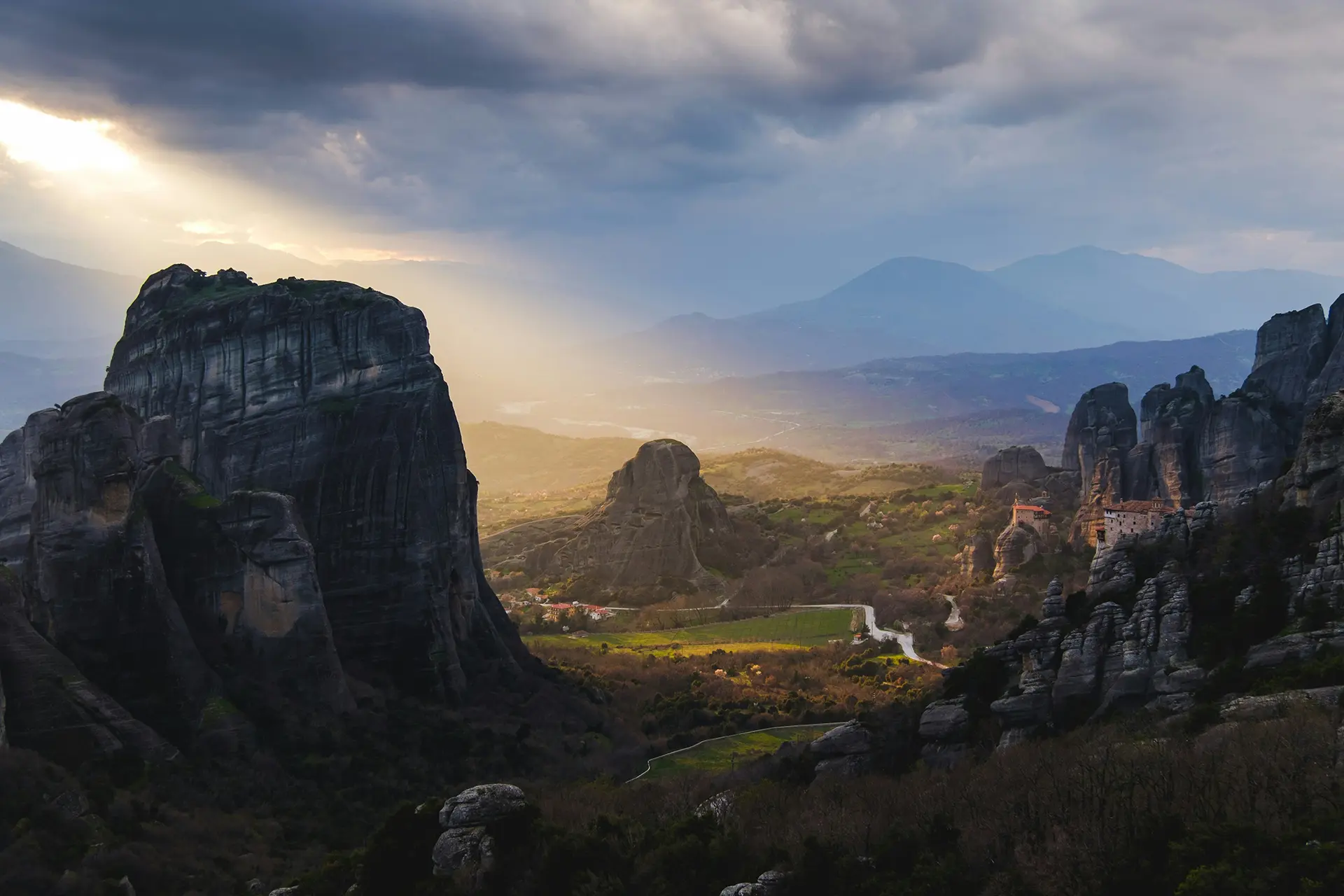
Where the plains end.
The mountains begin.
A town built at the threshold.
History on both sides of the river.
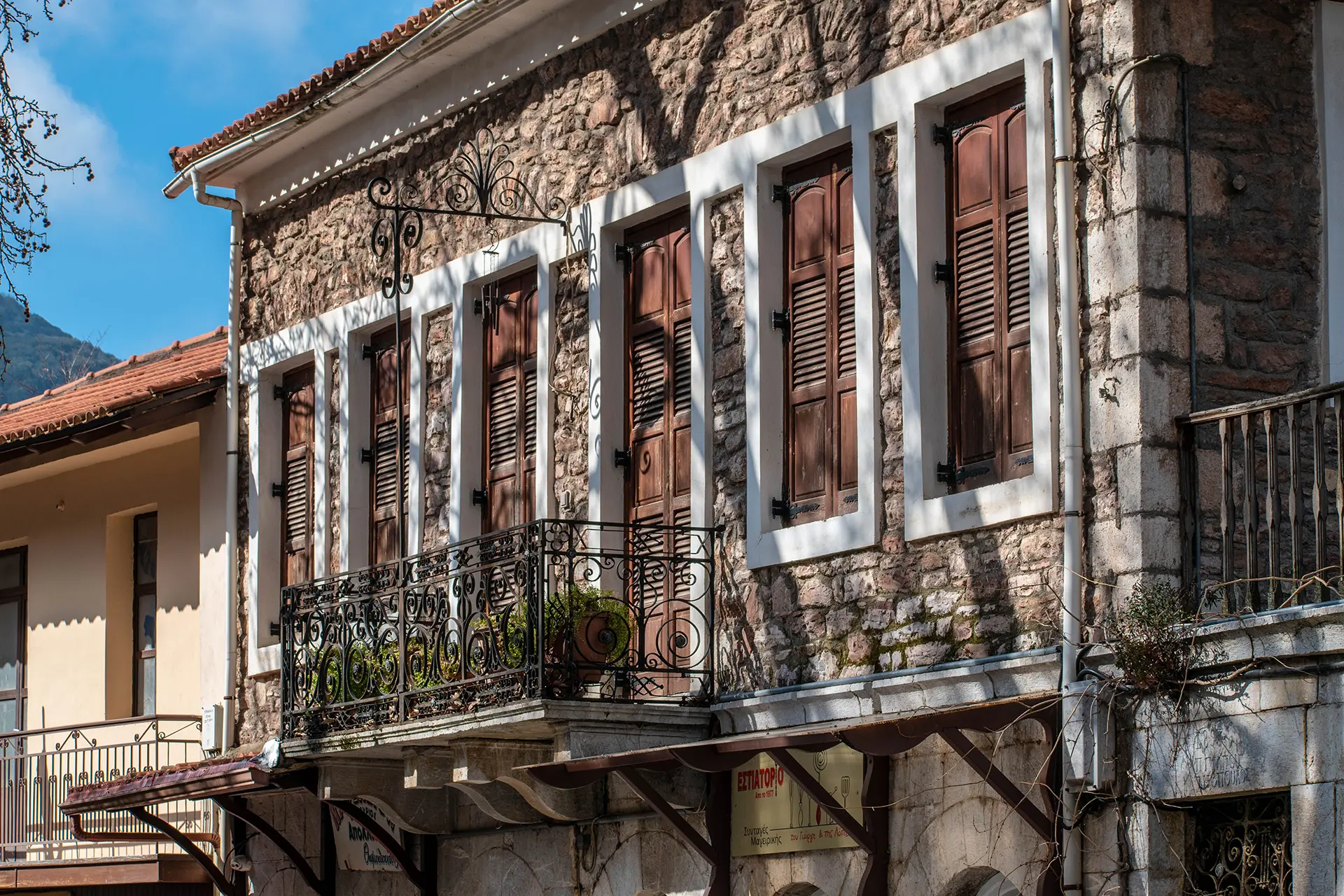
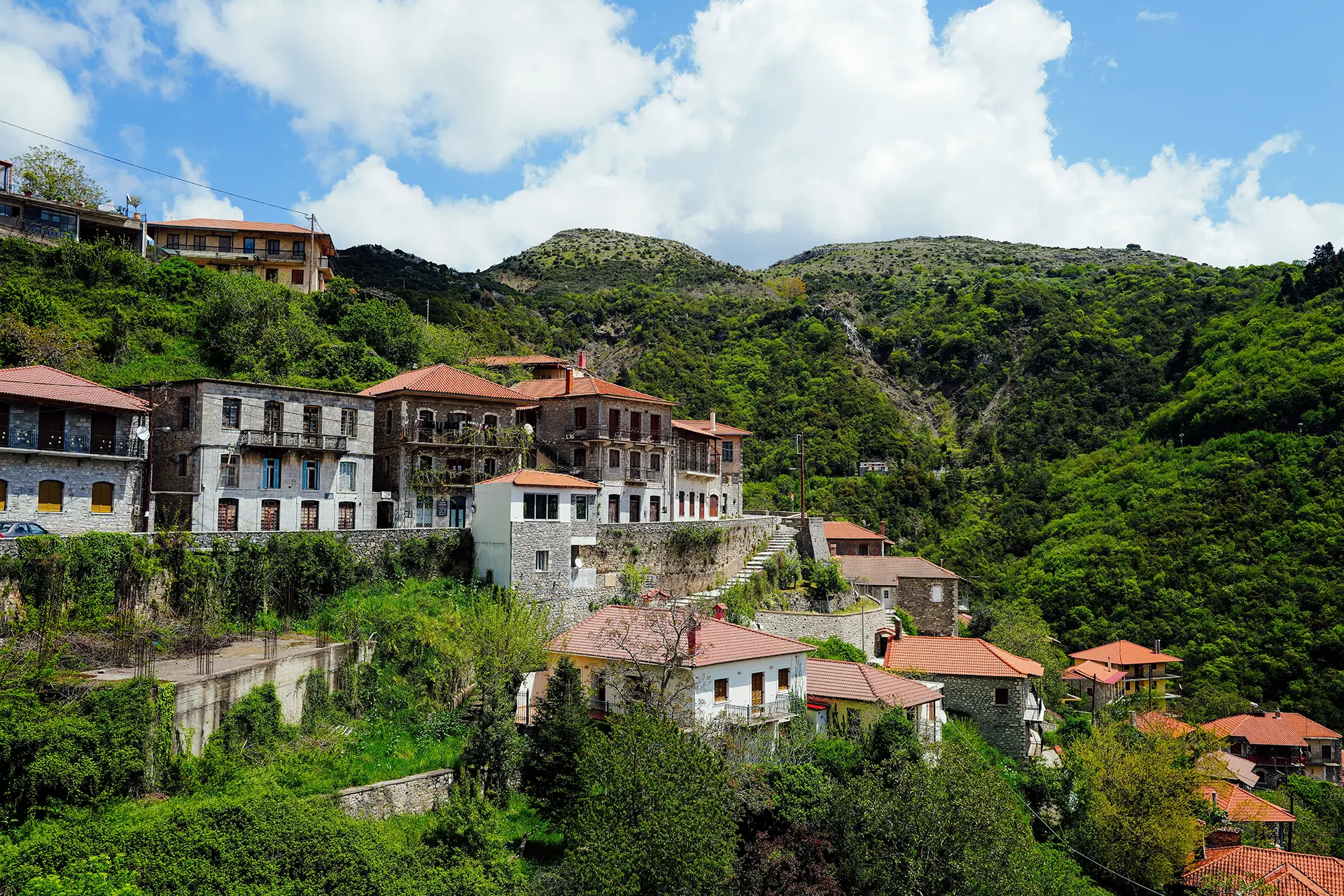
Pyli has always been a place of passage. Today it is a lively small town, but its story stretches back to the opposite bank of the Portaikos River, where the Byzantine settlement of Megalai Pylai once stood. The river still divides the modern town from this older landscape, creating a natural boundary between everyday life and some of the region’s most important historic monuments.
The most remarkable is Porta Panagia, a Byzantine church founded in 1283 and built where the old settlement once stood. Its architecture and setting beside the river make it one of the defining monuments of the wider Pyli region.
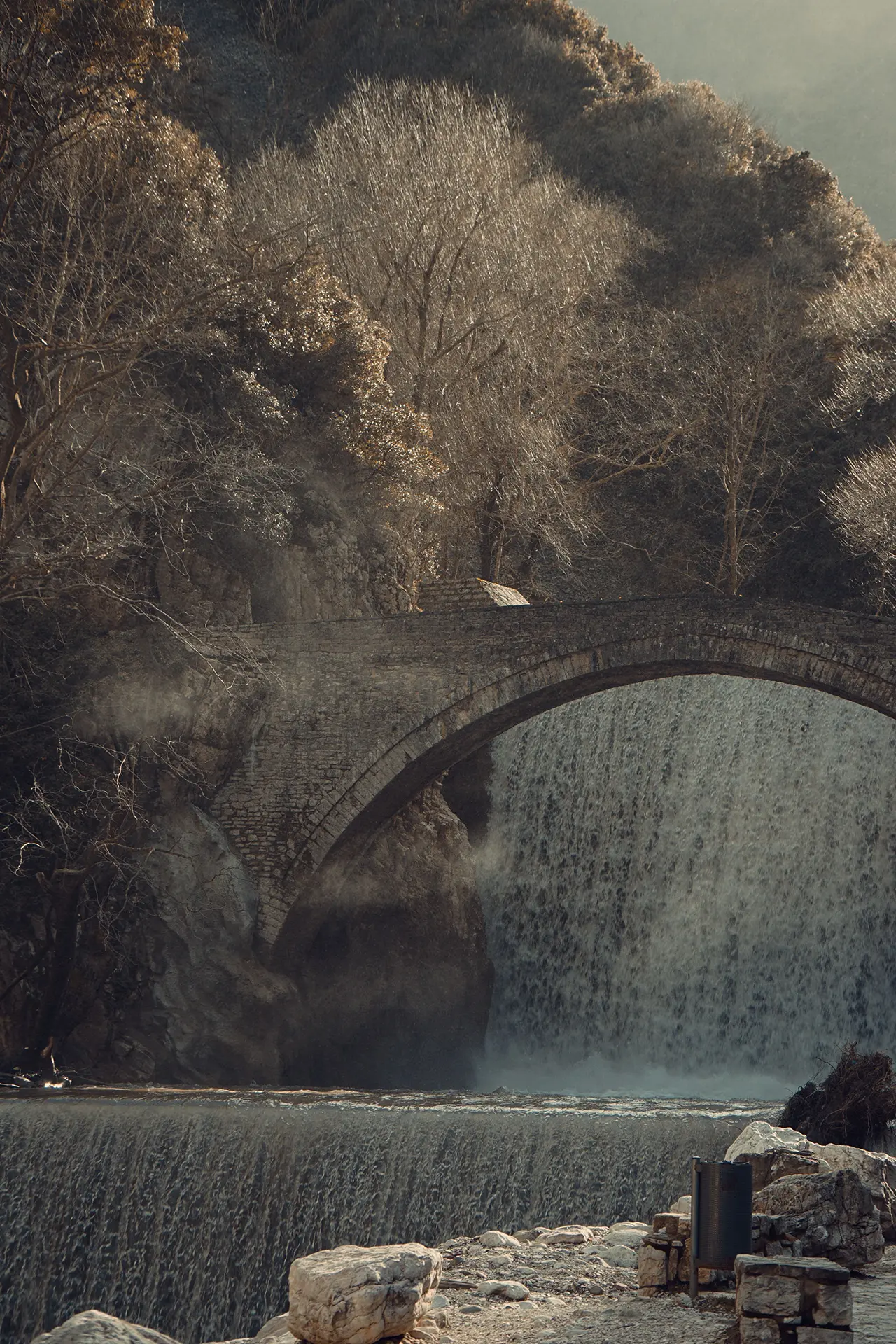
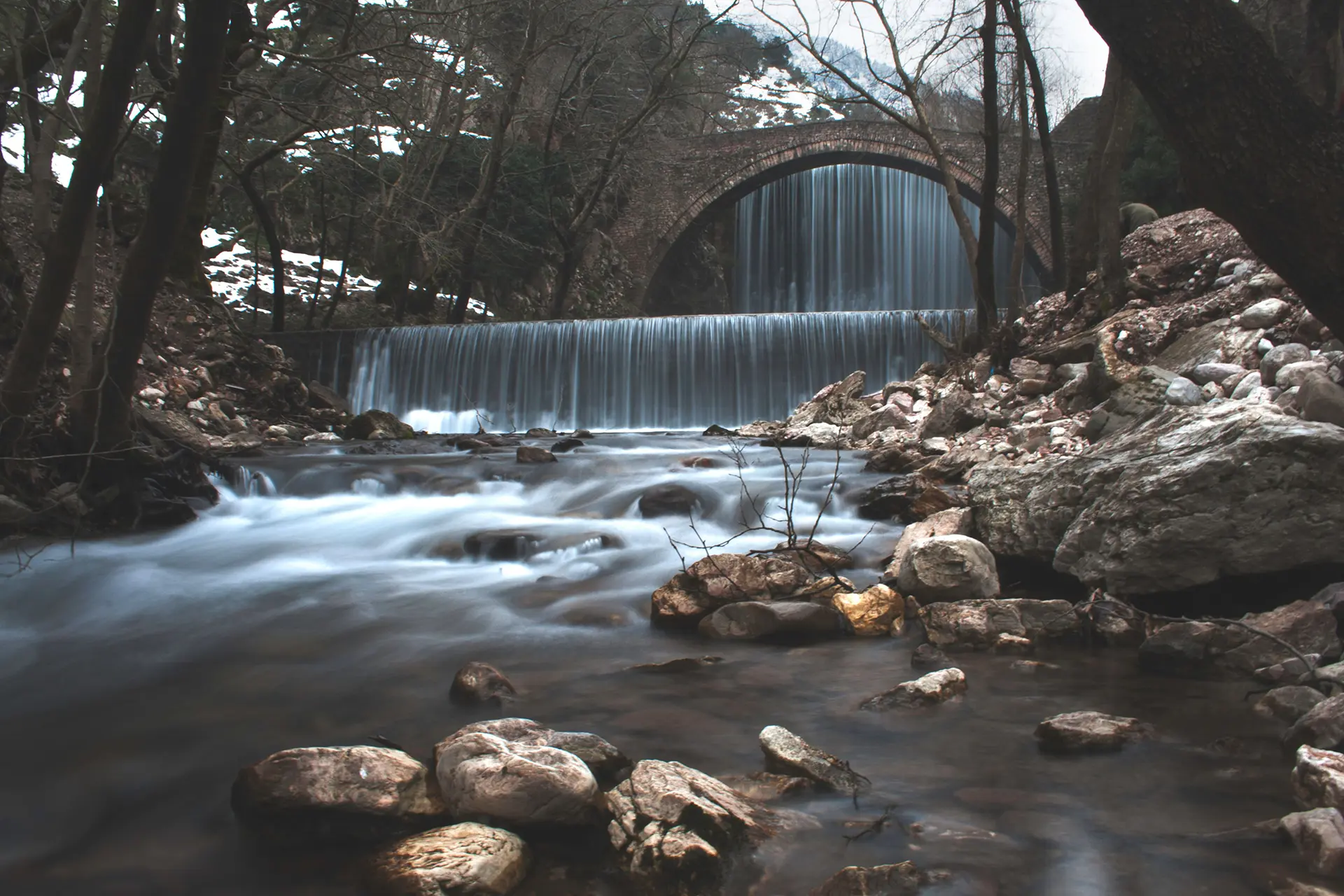
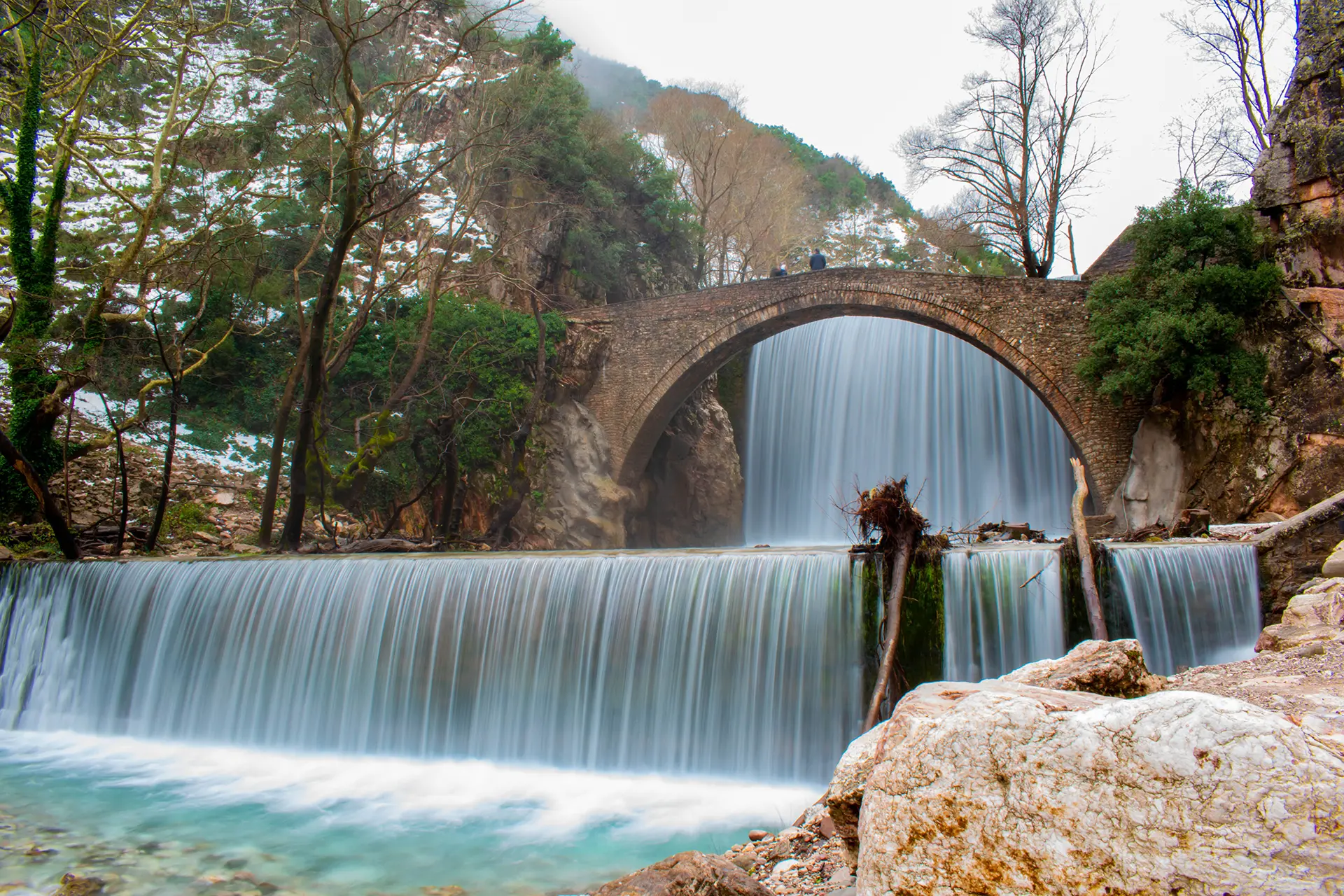
A little further upstream, the stone bridge of Pyli crosses the Portaikos beneath the steep walls of the valley. Built in 1514 under Saint Vissarion, its single arch once formed part of the route connecting the Thessalian plain with the mountain communities beyond. More than five centuries later, it remains one of the most recognisable landmarks on the road into the Pindus.
Yet Pyli is not simply somewhere to stop for its monuments. Its cafés, shops and relaxed pace make it a natural place to pause before heading higher. Spend some time beside the river, explore the older side of the settlement and then watch the landscape begin to change as the road turns towards the mountains.
At a glance
Altitude: Around 233 m
Distance from Pertouli: Around 28 km
Distance from Trikala: 14 km
Character: Historic gateway to the Pindus
Best for: Heritage, riverside walks & mountain road trips


Cross the river.
Step into centuries of history.
Pyli offers a different kind of experience from the higher mountain villages. Here, cultural heritage and landscape meet within a remarkably compact area: Byzantine architecture, stone bridges, riverside scenery and the dramatic entrance to Koziakas all lie within easy reach.
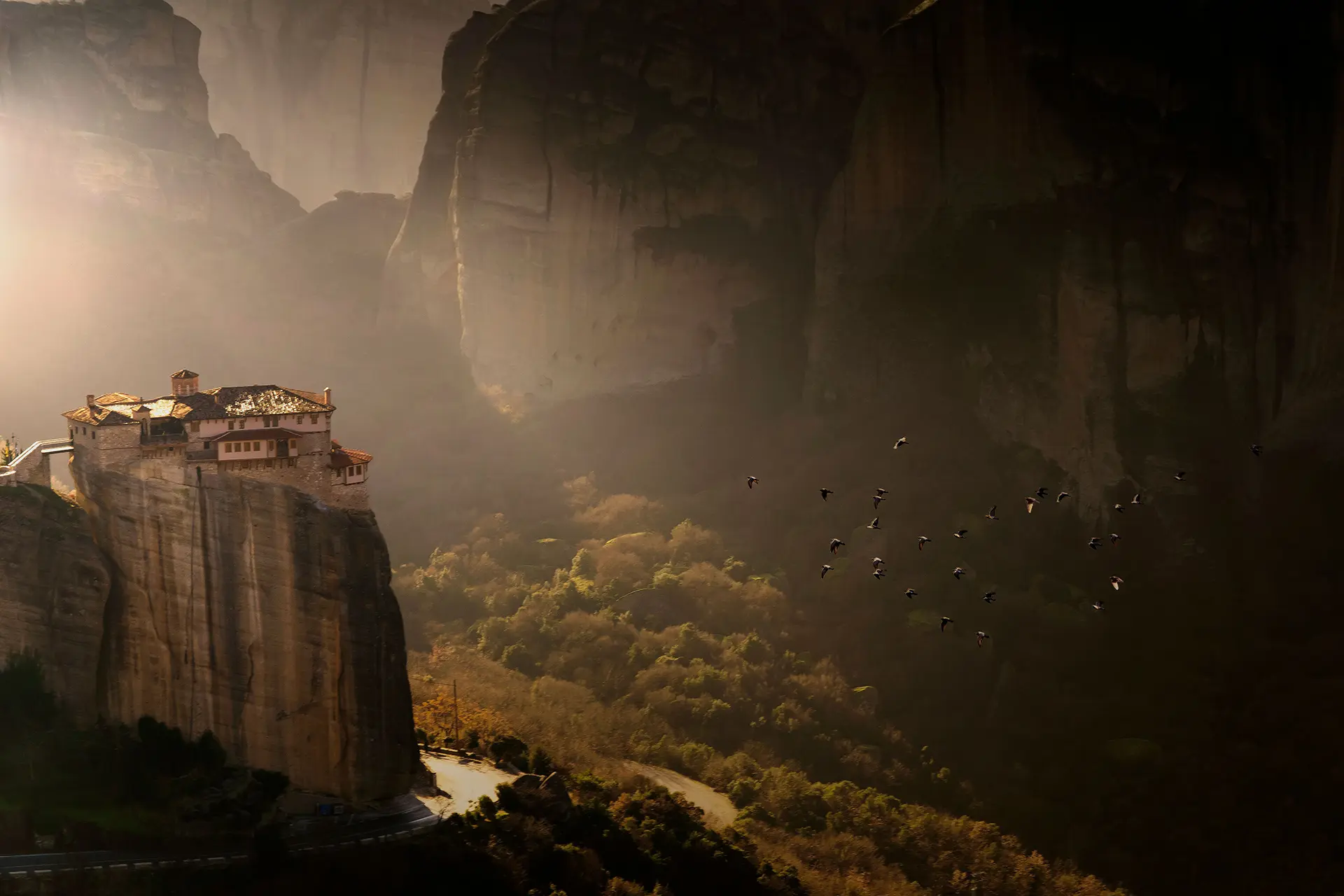
Explore Porta Panagia, walk across the historic stone bridge, follow the Portaikos through the valley or use Pyli as the starting point for a journey towards the surrounding mountains. Nearby, the Monastery of Saint Vissarion at Dousiko adds another important chapter to the area’s religious and architectural heritage.
Whether your journey is focused on history, nature or the road ahead, Pyli is where the transition begins.

Questions before you go.
Answers for the road ahead.
Pyli is well worth a visit in its own right. Porta Panagia, the historic stone bridge and the Portaikos River give the area a concentration of cultural and natural landmarks that can easily fill several hours before continuing into the mountains.
Pyli is approximately 28 kilometres from Pertouli by road. From Pyli, the route climbs through Koziakas towards Elati before continuing to the Pertouli Meadows and village.
Pyli is best known as the natural gateway from the Thessalian plain into the southern Pindus, as well as for the Byzantine church of Porta Panagia and the historic stone bridge of Saint Vissarion.
Porta Panagia is a Byzantine church founded in 1283 on the site of the old settlement of Megalai Pylai. It stands on the northern bank of the Portaikos River and is one of the area's most important historic monuments.
The bridge was built in 1514 under Saint Vissarion. Its large single stone arch spans the Portaikos River and historically connected the plains with the mountain communities to the west.
Yes. They lie along the same mountain route, so combining them is straightforward. For a more relaxed experience, however, it is worth allowing enough time to stop at Pyli's monuments, spend time in Elati and explore the Pertouli Meadows rather than treating the route simply as a drive.
Pyli can be visited throughout the year. Spring brings stronger river flow and green landscapes, summer is good for combining sightseeing with the cooler mountains, autumn adds colour to the surrounding slopes, and winter makes Pyli a natural first stop on the way to Elati and Pertouli.
Leave the plains behind.
Enter the mountains.
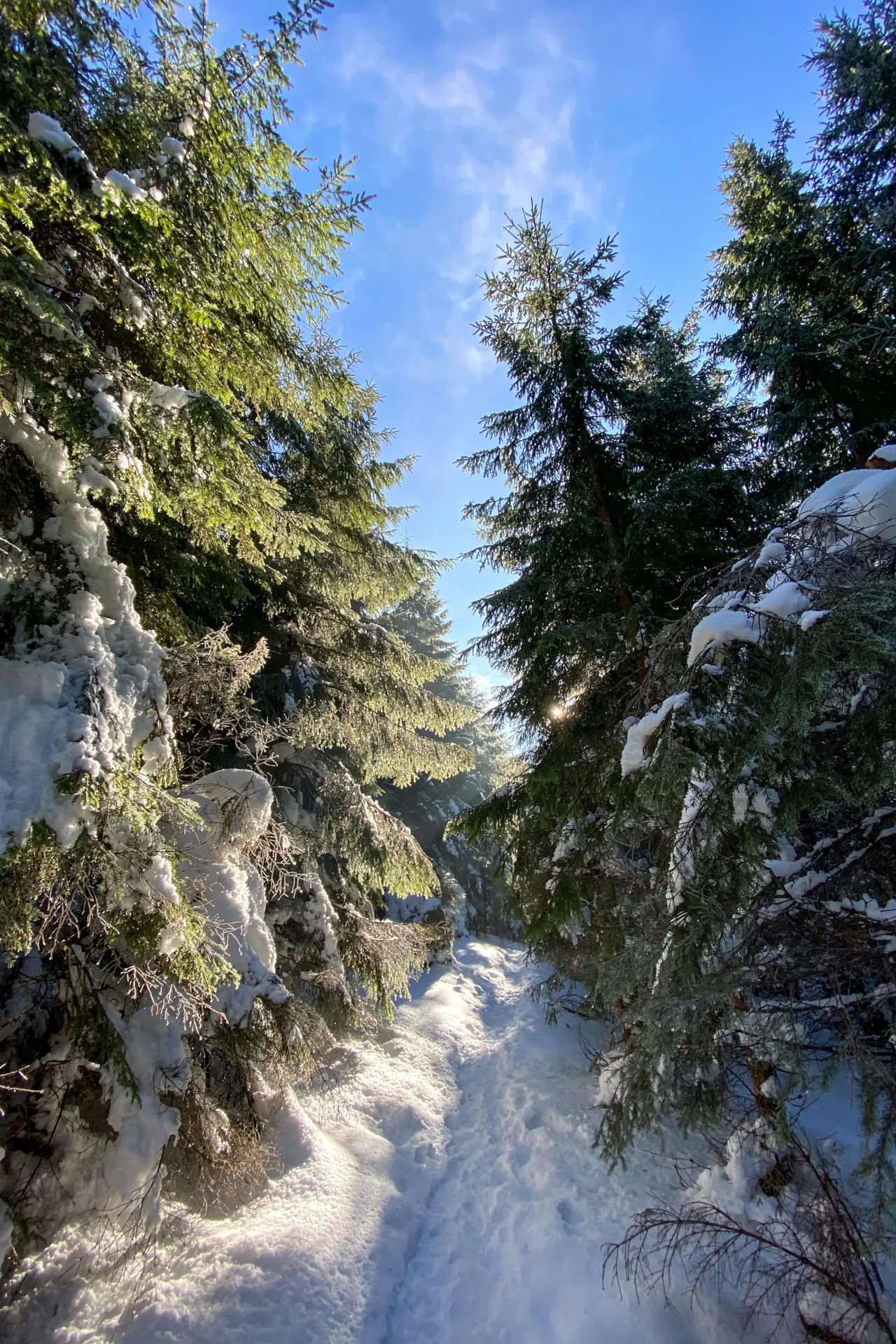
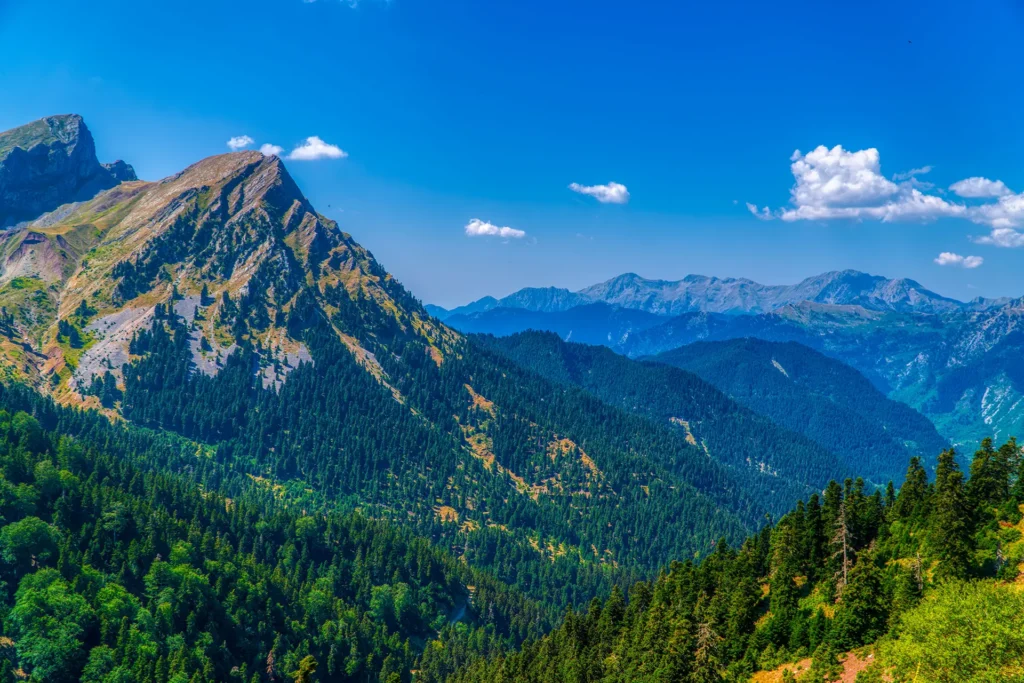
Beyond Pyli, the journey changes almost immediately. The road enters the Portaikos valley and begins climbing along the slopes of Koziakas, leaving the open Thessalian landscape behind as forest and mountain take its place.
Elati is the first major mountain destination along the route. Continue beyond it and the fir forest grows denser before opening suddenly onto the Pertouli Meadows, the Ski Center and eventually the village of Pertouli itself.
It is one of those roads where the journey becomes part of the destination. Within a relatively short distance, the landscape moves from river valley to forested mountains and finally to the high meadows of Pindus.
Pyli is the gate.
Everything beyond it leads higher.
Go beyond the guidebook and
discover Pertouli.
Explore carefully written travel guides, local stories, hidden routes and expert recommendations. Find inspiration for your next journey and discover more of the landscape before you arrive.