Discover
Experience
Connect
A mountain village.
A world of its own.
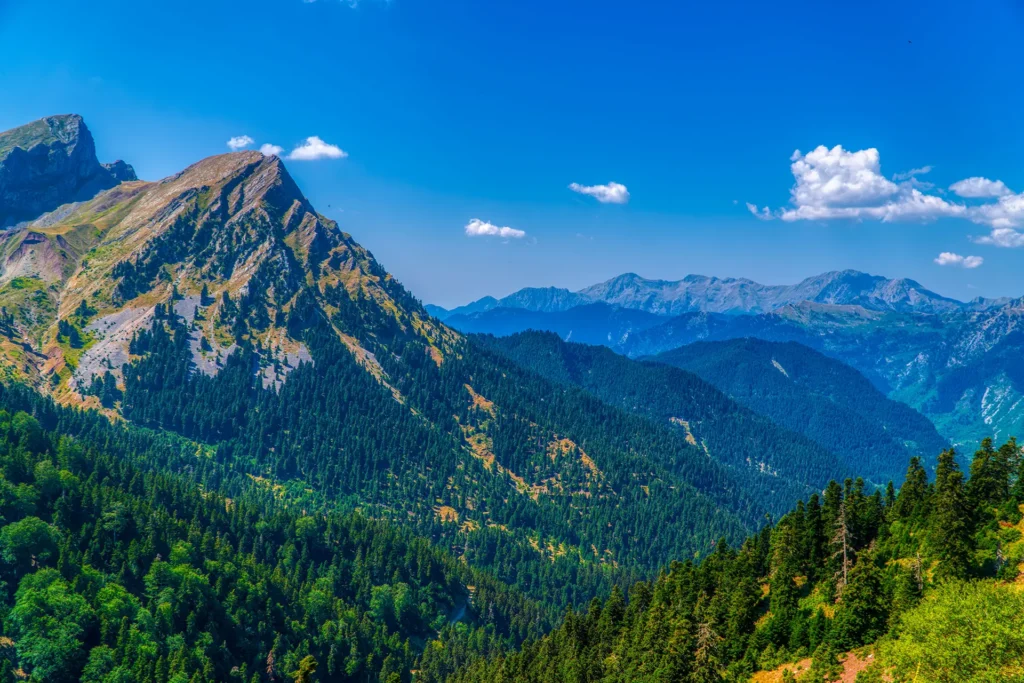
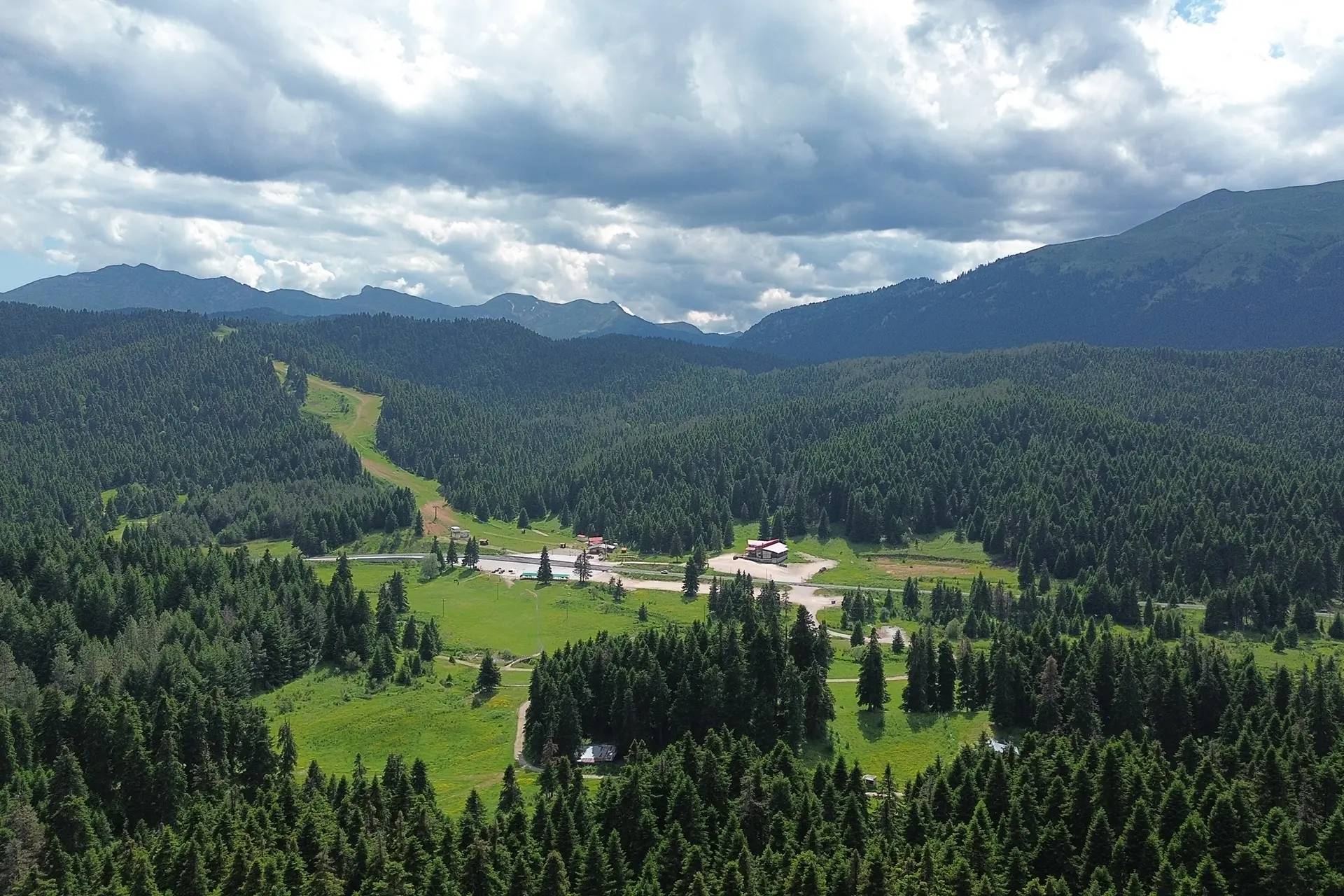
Perched at around 1,150 metres on the slopes of Koziakas, Pertouli is a small mountain village surrounded by fir-covered peaks, running water and the expansive landscapes of the central Pindus. Trikala lies approximately 47 kilometres away, yet arriving here feels like travelling much further — away from the plains, away from the noise, and into a landscape where the mountains set the rhythm.
The road climbs gradually through forest and stone-built villages before opening towards Pertouli and the high country beyond. In every direction, the landscape feels close: dense woodland, steep slopes, open clearings and the dramatic silhouettes of the surrounding mountains.
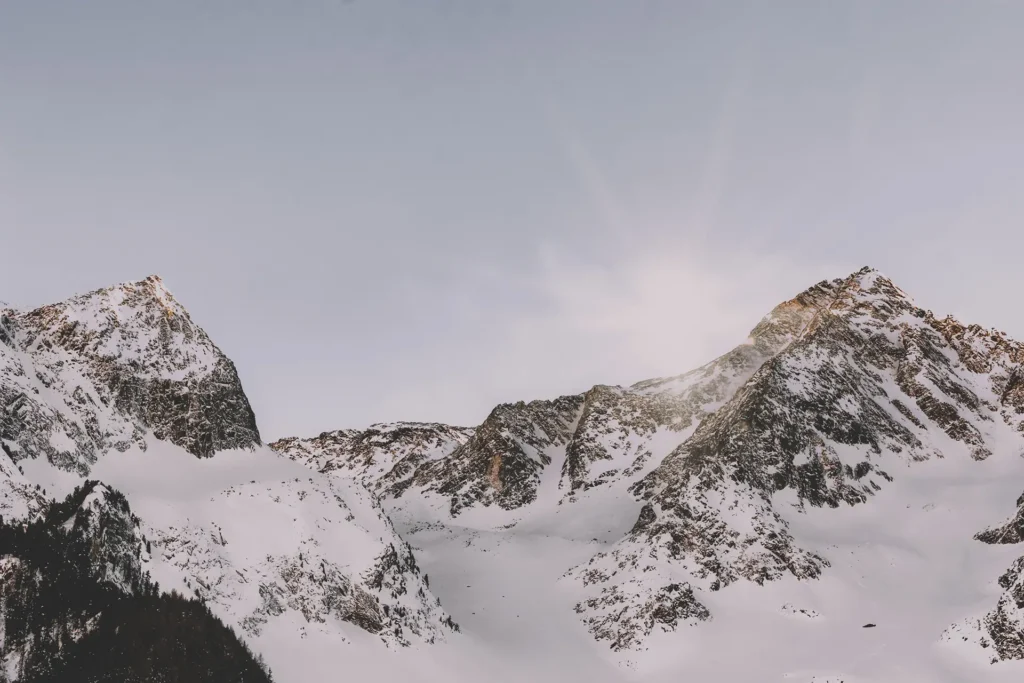
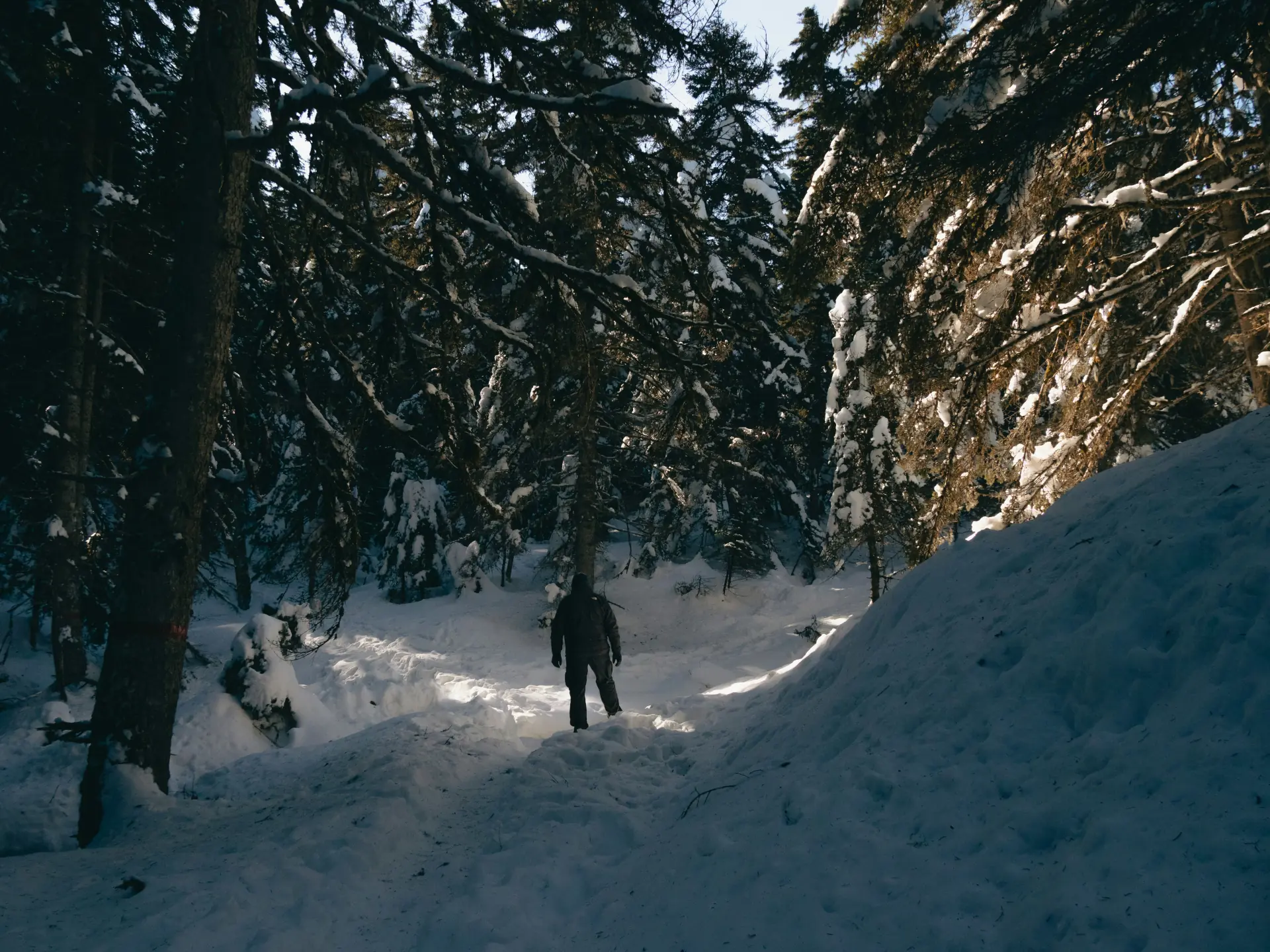
Life in Pertouli has always been shaped by this setting. The seasons dictate its colours, its pace and its traditions. Winter brings deep snow and quiet mornings; spring returns water and movement to the forest; summer fills the mountains with cool air and long days outdoors; autumn slows everything again beneath changing leaves.
Pertouli is not simply somewhere to visit. It is a place that changes the way you experience time — smaller in scale, closer to nature and distinctly different with every return.
Pertouli is one of the oldest mountain settlements of the Pindus, with written references stretching back more than a thousand years. Its history has been marked by long periods of continuity interrupted by epidemics, destruction and rebuilding.
Again and again, the village endured. People returned, homes were rebuilt and life resumed beneath the same mountains. That resilience remains an important part of Pertouli’s identity today — a place whose history is inseparable from the landscape and the generations that chose to make their lives here.
The First Written Reference
Pertouli appears in the records of the Monastery of Varlaam, providing one of the earliest known written references to the village.
The Village Falls Silent
A plague epidemic leaves Pertouli deserted. The settlement is later inhabited again, beginning another chapter in its long history.
Pertouli Appears Again
The name Pertouli is recorded in a register of the Great Meteoron Monastery, confirming the village’s renewed presence during the eighteenth century.
War Reaches the Mountains
During the Second World War, Pertouli is destroyed again. The village had become closely connected with the activities of the Greek resistance in the surrounding mountains.
Pertouli is burned during the turbulent years of the Greek War of Independence, together with nearby Neraidochori and Pyrrha.
A Village Rebuilt
The settlement is rebuilt once again, continuing a recurring pattern in Pertouli’s story: destruction followed by return and renewal.
A New Relationship with the Forest
Management of the Pertouli University Forest is granted to Aristotle University of Thessaloniki, beginning a relationship between the village, forestry education and scientific research that continues to define the area.
War Reaches the Mountains
During the Second World War, Pertouli is destroyed again. The village had become closely connected with the activities of the Greek resistance in the surrounding mountains.
Pertouli Becomes a Mountain Destination
The development of the ski centre marks the beginning of a new era for Pertouli, gradually establishing the village and its surrounding meadows as one of Thessaly’s best-known mountain destinations.
Stories of survival.
A place that always returned.
Some places are best understood
by moving through them.
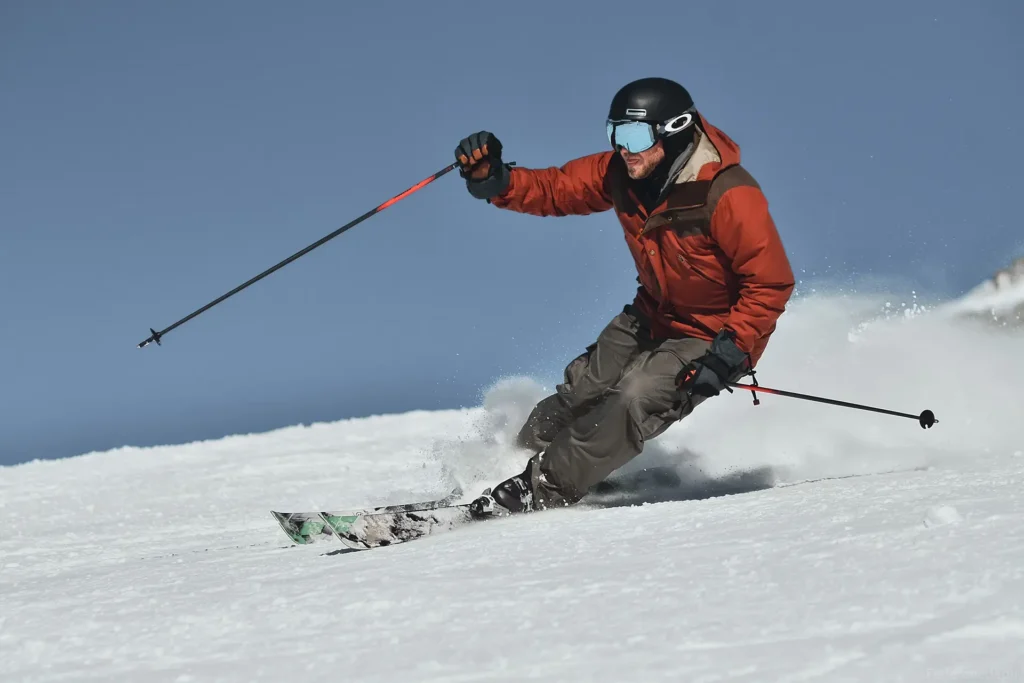
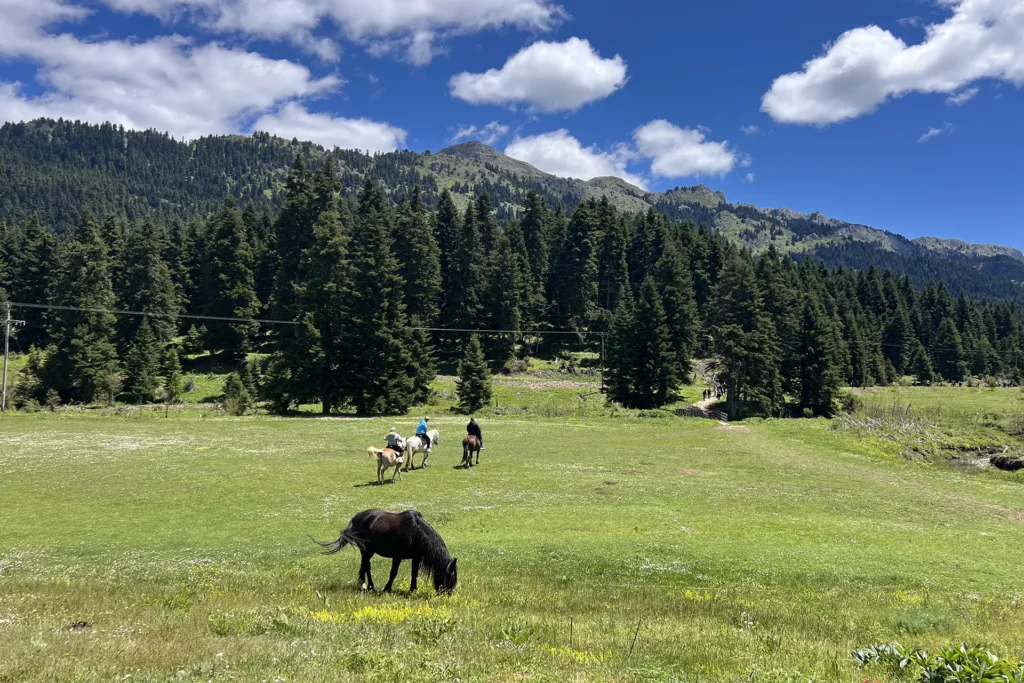
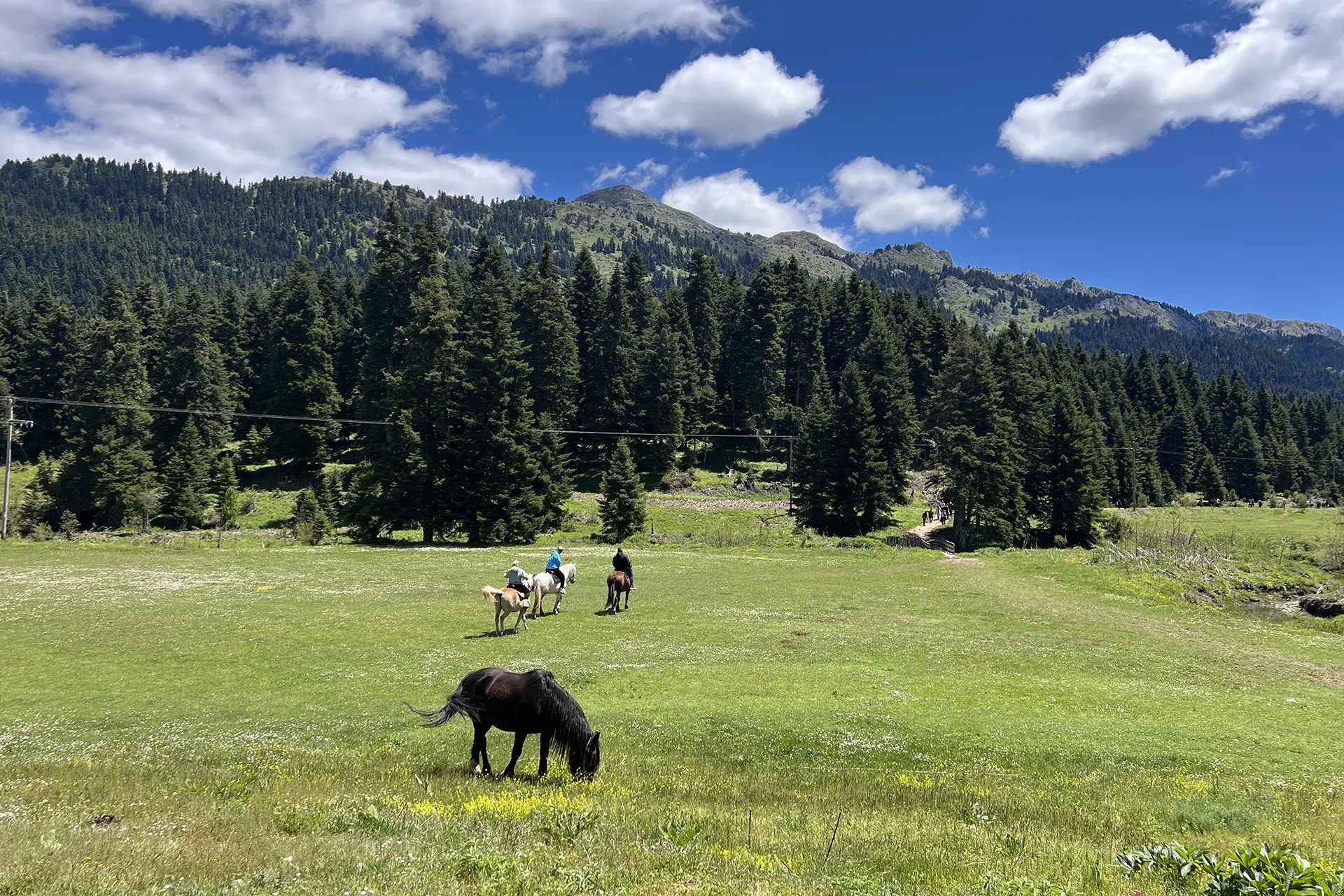
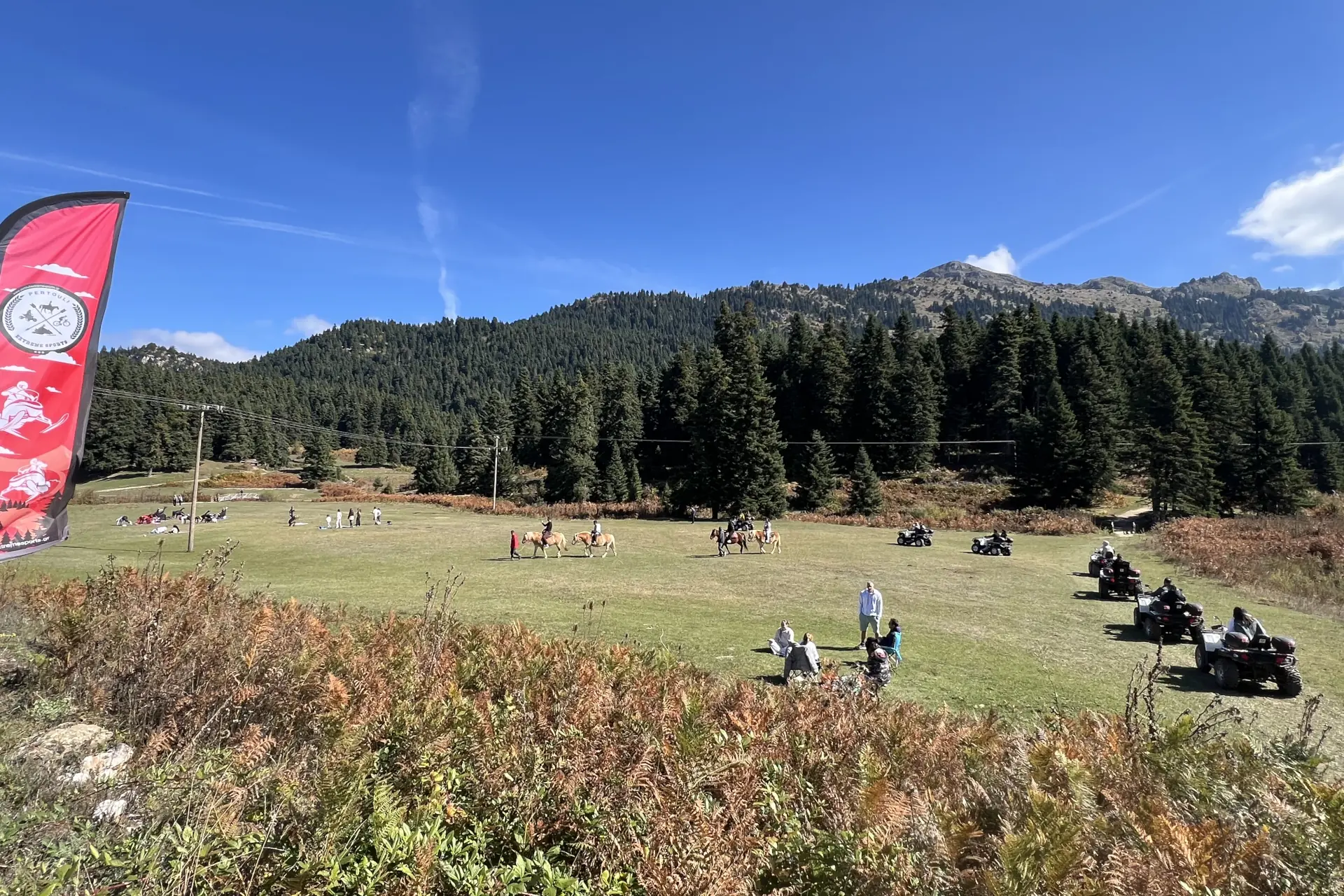
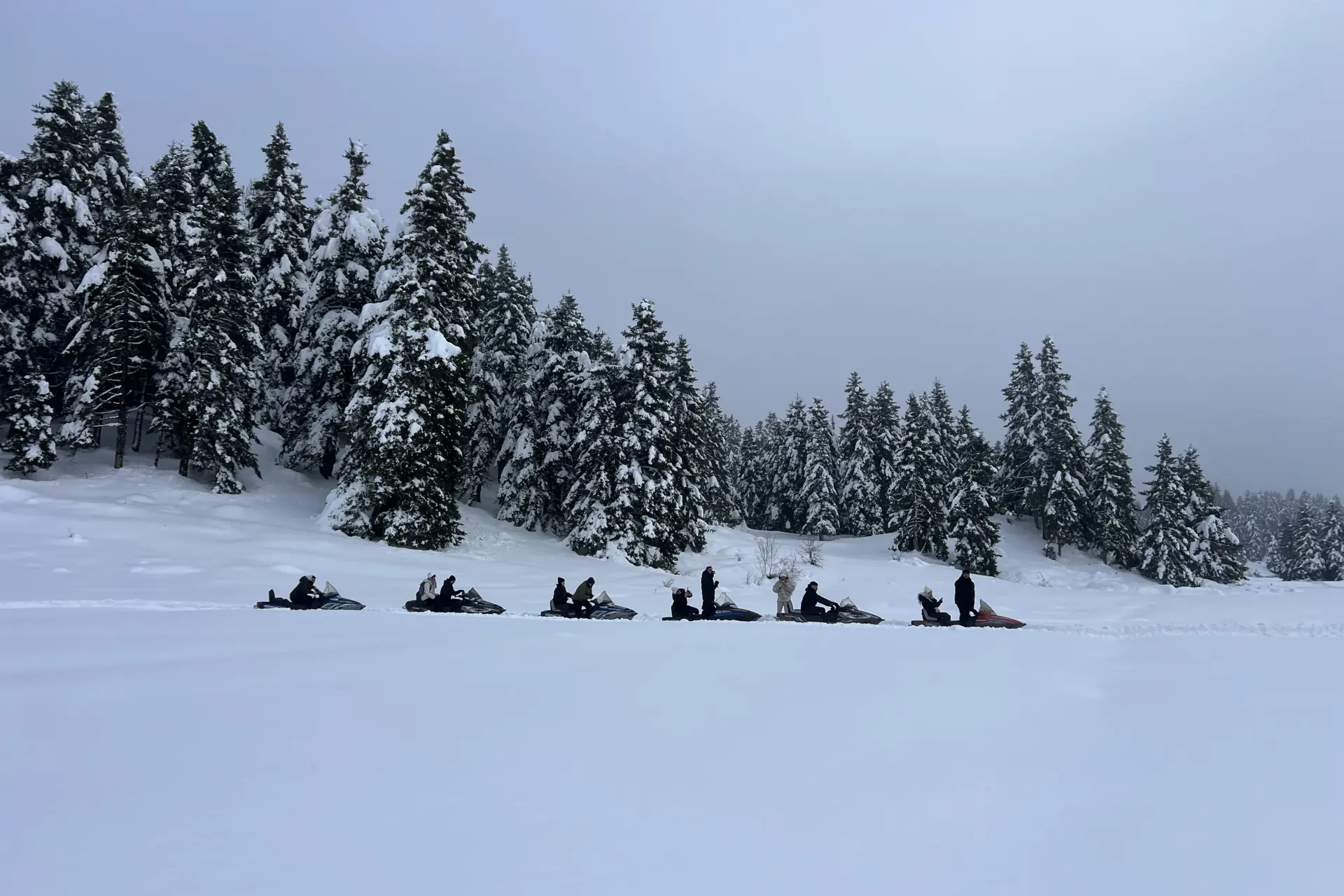
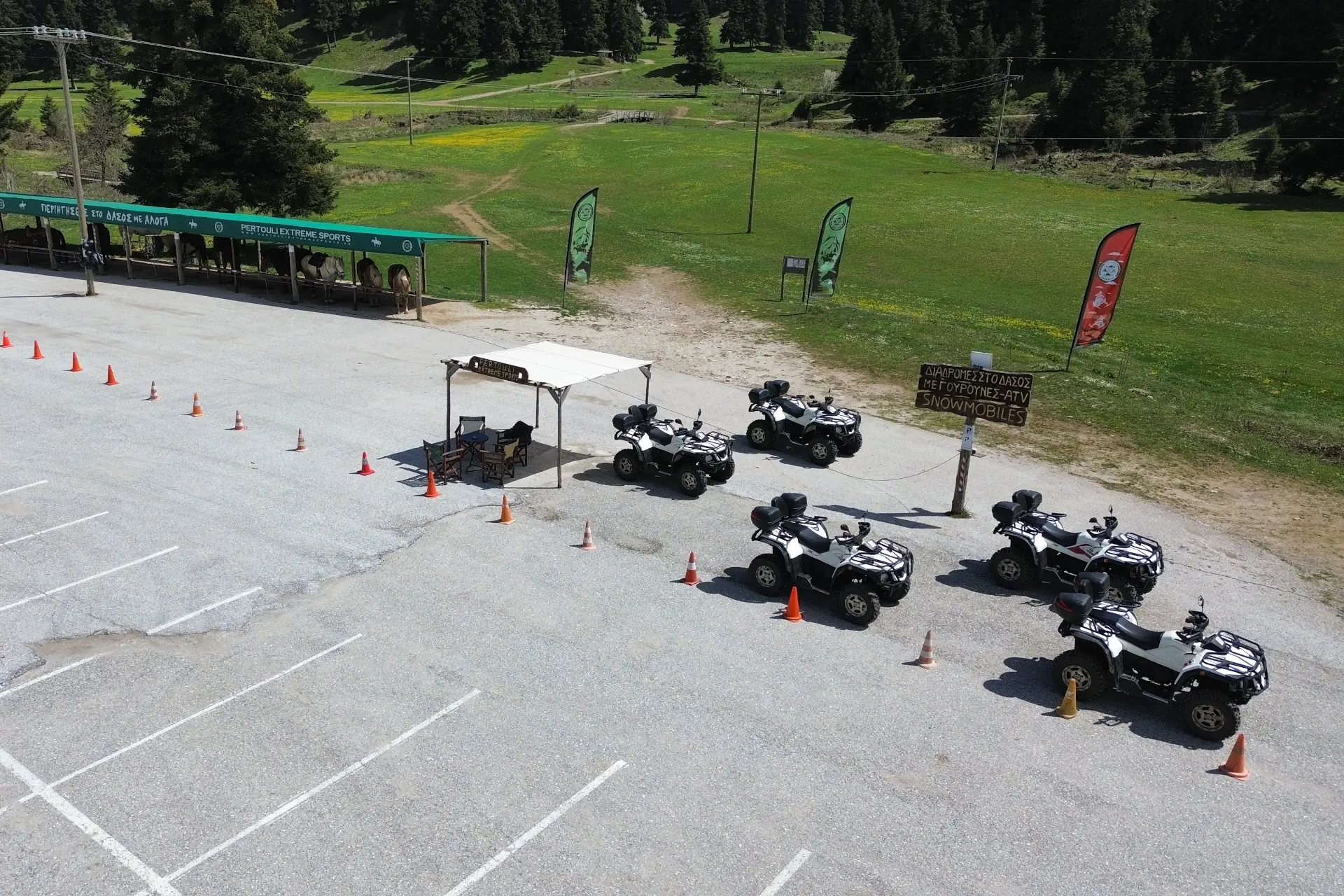
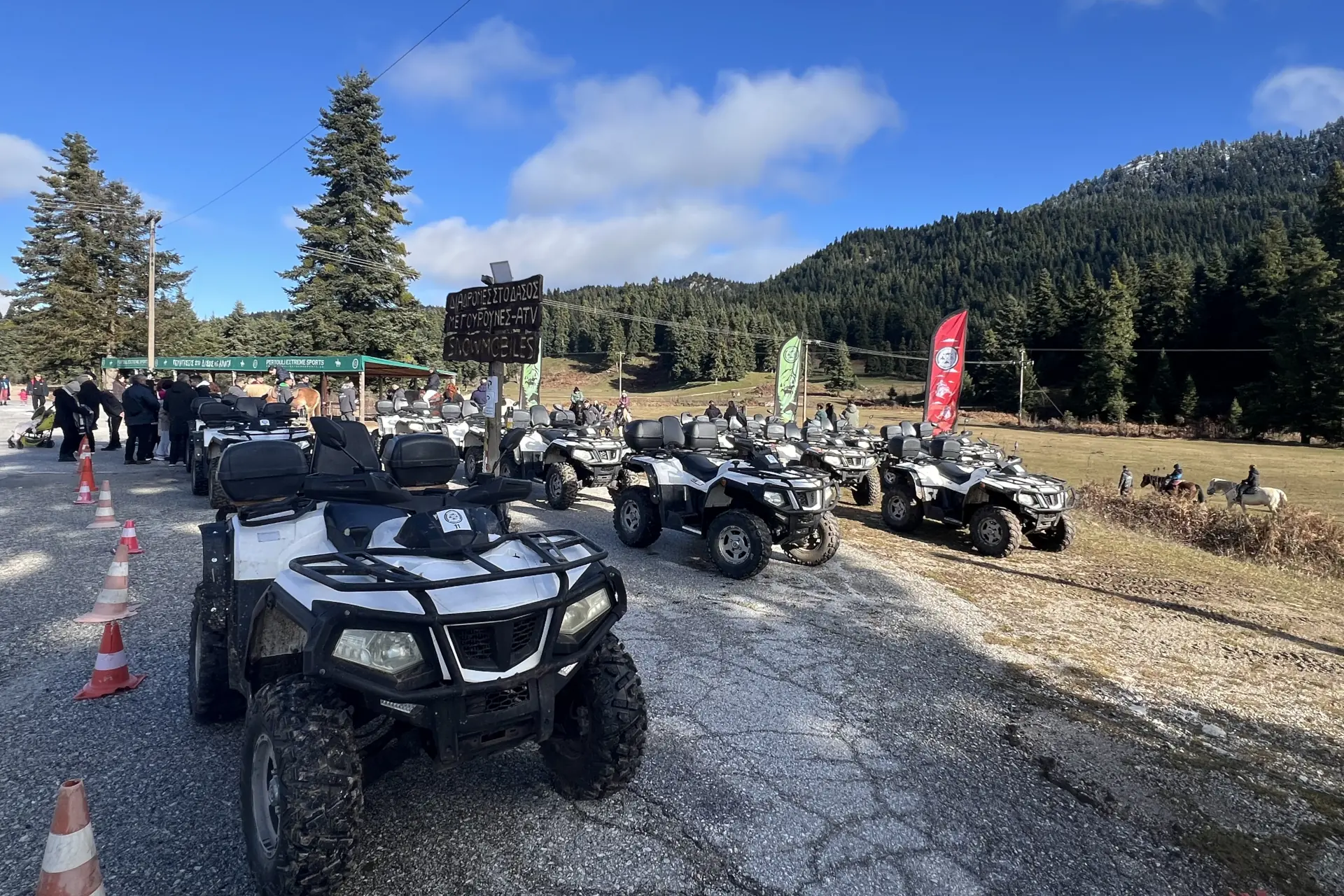
Ride across mountain meadows, follow trails beneath the fir trees, take on the snow or venture deeper into the landscape with a local guide.
Our featured experiences are selected for their sense of place, quality and ability to reveal something unforgettable about Pertouli.
Small in scale.
Immersed in the landscape.
Pertouli is built amphitheatrically into the mountainside, surrounded by the peaks of Koziakas, Neraida, Loupata and Avgo. From almost anywhere in the village, the presence of the mountains is immediate. Roads bend with the terrain, houses step into the slope and the forest begins almost where the village ends.
That balance is part of its appeal.
Its character is intimate rather than monumental. Stone, timber, sloping roofs and mountain gardens create an architecture shaped by climate and place. During winter, snow softens the village into a quieter landscape. In summer, balconies open towards the forest and the streets become part of daily outdoor life.
The centre remains compact and easy to explore on foot. Cafés, tavernas, guesthouses and local gathering places sit within a village that has never entirely surrendered its residential character. Visitors are present, especially during winter weekends and holidays, but Pertouli still feels first and foremost like a mountain community.
That balance is part of its appeal.
You can spend the day exploring the wider region and return to somewhere that feels grounded and calm. Mornings begin with cold, clean air and the sound of the village waking slowly. Evenings often end around a fire, over local food, or simply watching the mountains disappear into darkness.
There is very little distance between village life and the landscape surrounding it. In Pertouli, nature is not an excursion. It begins outside the door.
A destination to discover.
A place that remains itself.
Today, Pertouli is one of Thessaly’s best-known mountain destinations. Its ski centre, natural landscape and proximity to some of the region’s most beautiful villages attract visitors throughout the year, while outdoor activities have expanded the reasons to travel here far beyond winter.
And yet, its strongest quality may be what has not changed.
Pertouli still feels like a mountain village rather than a resort built around one. The destination has grown through guesthouses, restaurants and experiences, but the landscape remains dominant. The village remains small. The forest still defines the horizon. Roads still lead quickly away from buildings and back into the mountains.
That makes the experience here feel unusually personal.
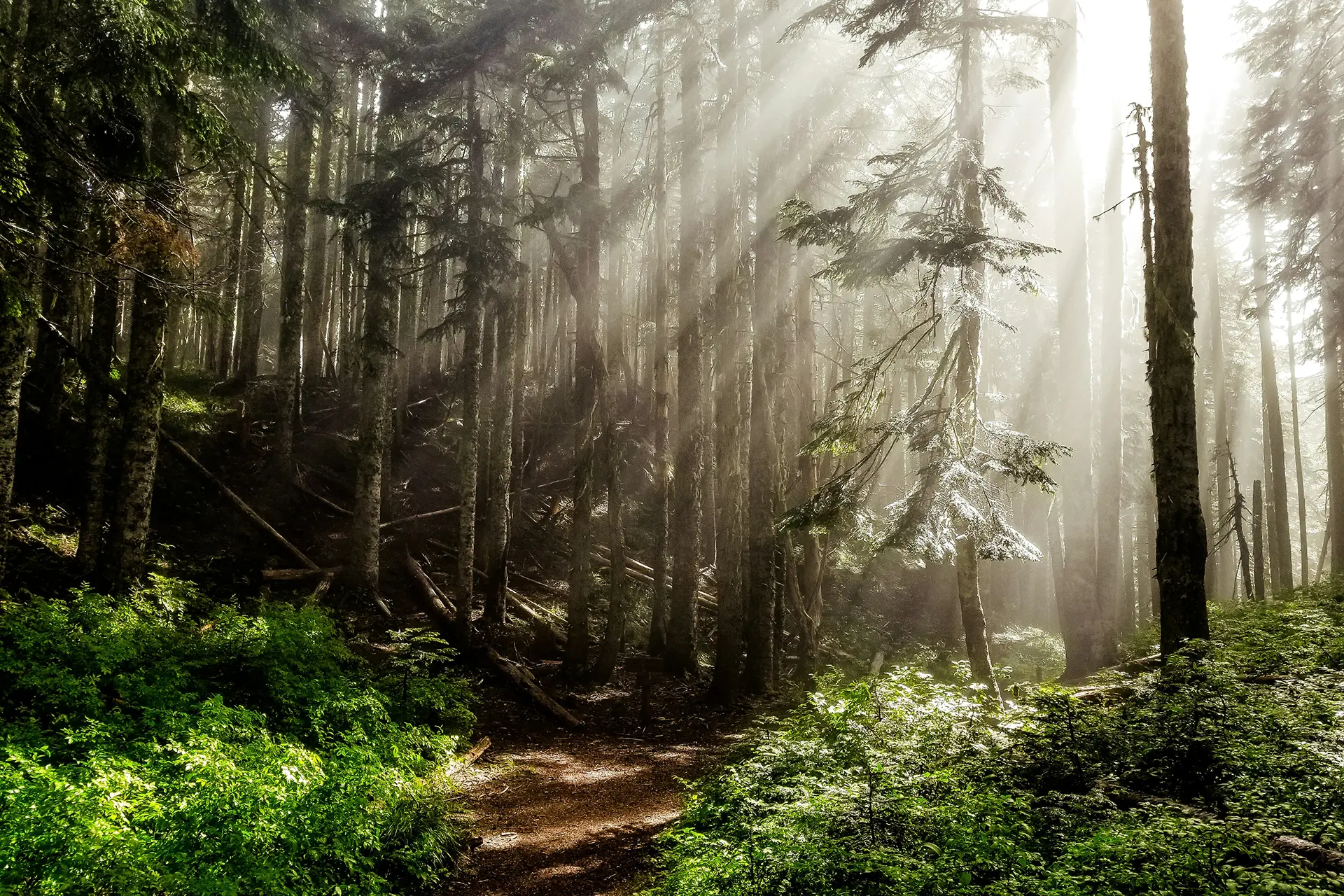
You might arrive for a particular reason — skiing, horse riding, hiking, an ATV adventure, a quiet weekend in the snow. But some of the most memorable moments rarely appear on an itinerary: fog moving through the trees, fresh snow before the roads become busy, afternoon light across the meadows, or the sudden quiet that arrives when you leave the main road behind.
There is a sense of space here that is increasingly difficult to find.
Pertouli does not ask you to rush from attraction to attraction. It works better when you allow the destination to unfold gradually — a morning in the forest, lunch in the village, a road followed simply because it looks interesting.
Come for the mountains, certainly. But leave enough time for everything in between.
The right place to stay
is part of the experience.
There is no single way to experience Pertouli. For some, it begins with snow and the energy of winter. For others, it is a summer escape beneath the fir trees, a long walk through the forest or a quiet weekend surrounded by mountains.
What connects those journeys is the place itself: a village shaped by altitude, history, forest and a way of life that still feels closely connected to its surroundings.
Follow the roads higher. Leave room for unexpected stops. Venture beyond the village and return when the light begins to fade.
Pertouli has a way of revealing itself slowly — and giving you a reason to come back.
Go beyond the guidebook and
discover Pertouli.
Explore carefully written travel guides, local stories, hidden routes and expert recommendations. Find inspiration for your next journey and discover more of the landscape before you arrive.