Discover
Experience
Connect
Villages shaped by rivers.
Journeys shaped by the mountains.
Follow the river upstream.
Enter the heart of Pindus.
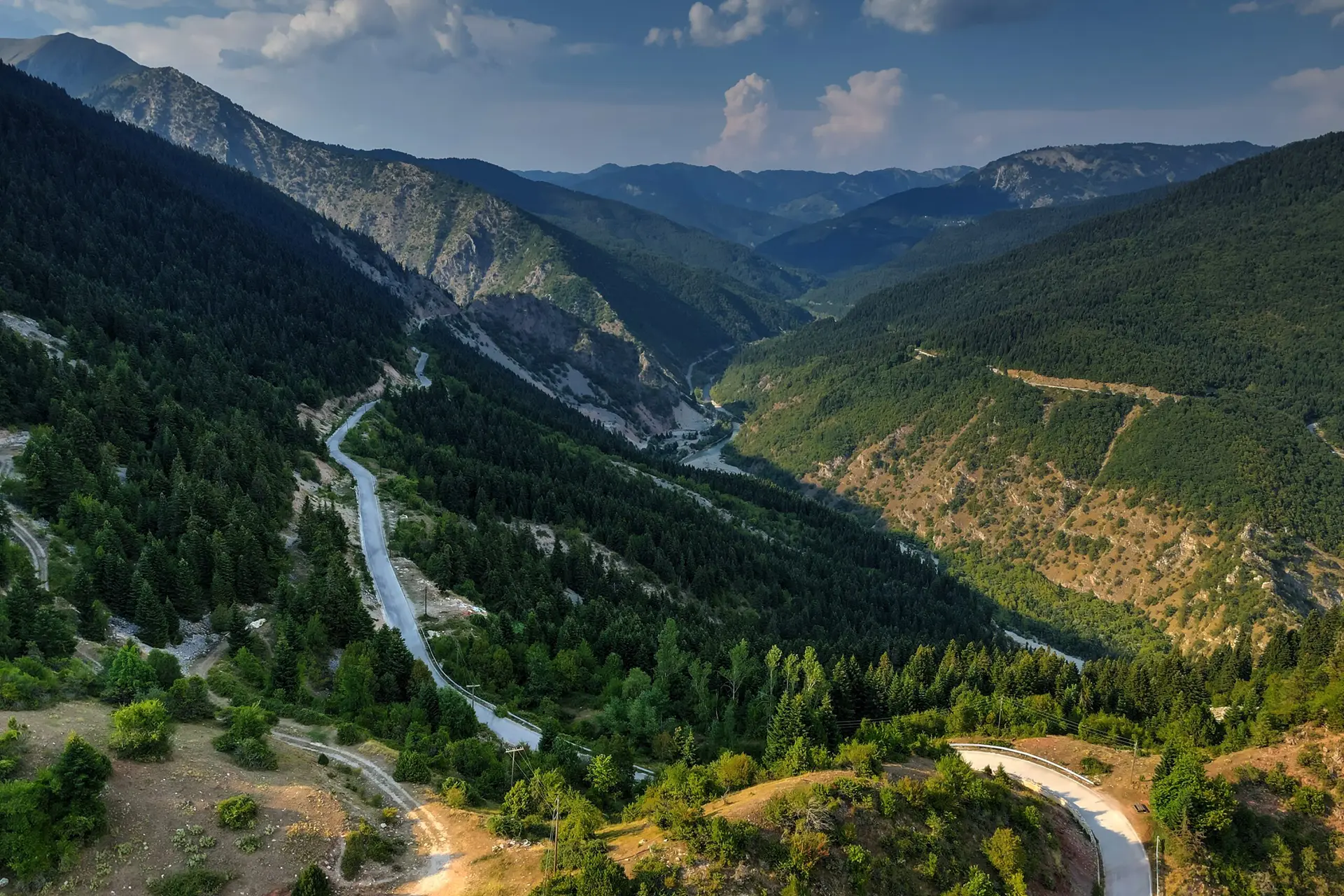
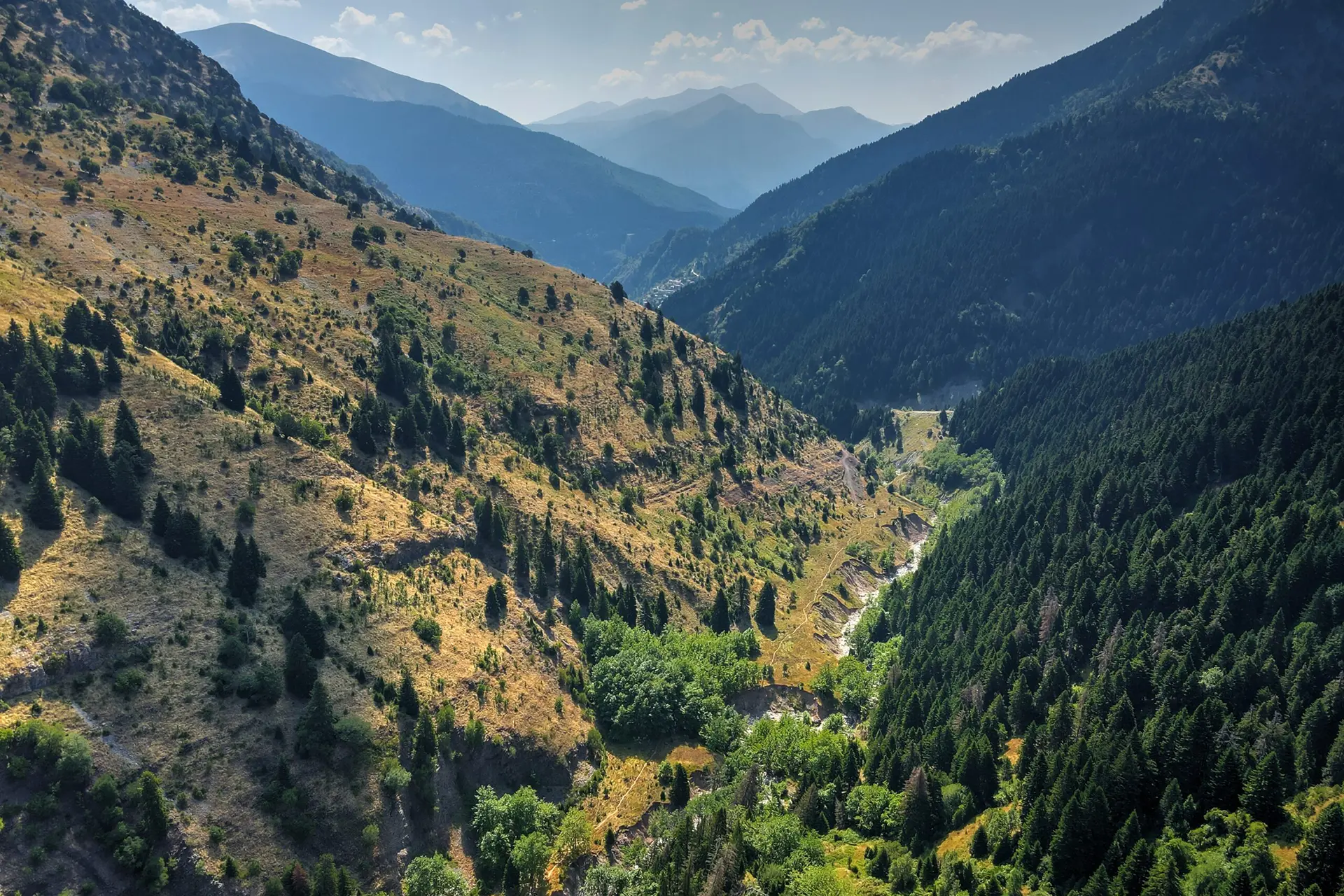
West of Pertouli and Neraidochori, the landscape opens into one of the most remote mountain regions of Thessaly. This is Aspropotamos — a territory of deep valleys, high passes, dense forests and villages scattered along the upper reaches of the Acheloos River.
Here, the river is still known as Aspropotamos, the “White River”, before continuing its long journey south as the Acheloos. The surrounding region takes its name from those waters and extends across a broad part of the southern Pindus, between Koziakas to the east and the high mountains of Lakmos and Kakarditsa to the west.
The journey into Aspropotamos is part of the experience. Leaving Pertouli behind, the road continues through Neraidochori, Pyrrha and Desi before reaching Aleksiou Bridge, traditionally regarded as the entrance to the core Aspropotamos region. From there, roads branch towards villages hidden among forests, valleys and mountain streams.
This is not a destination built around a single attraction. Its character comes from the distance between places, the silence of the mountains and the feeling of travelling through a landscape where nature remains firmly in control.
At a glance
Go further.
Stay curious.
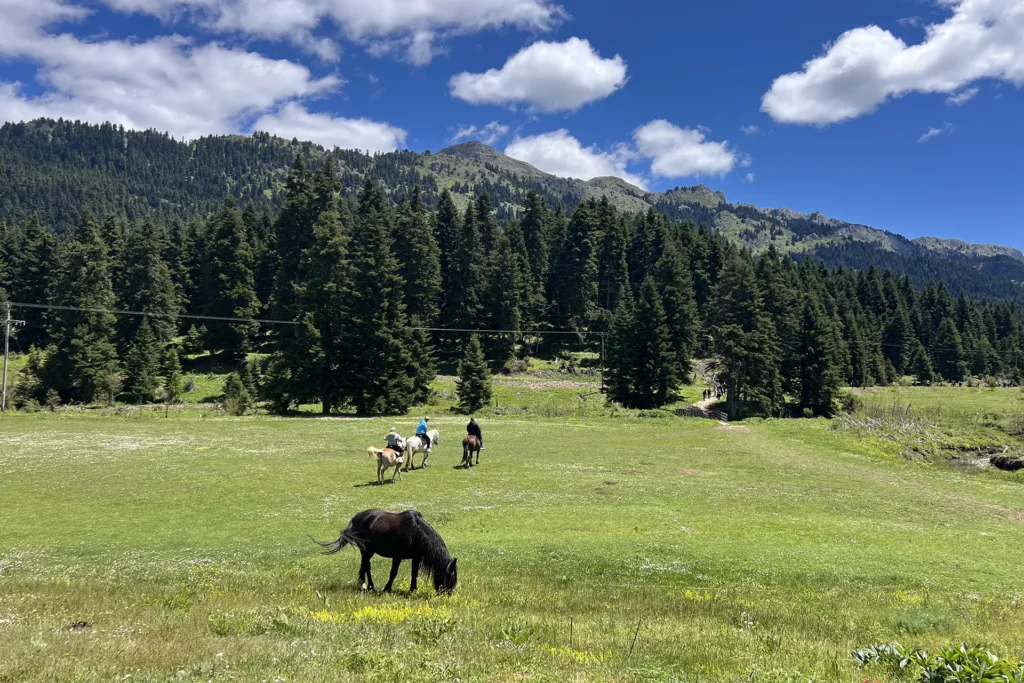
Aspropotamos rewards travellers who are willing to slow down and explore. Hiking trails follow old routes through the mountains, mountain-bike tracks cross forest terrain, and stretches of the river offer rafting and canoeing when conditions allow.
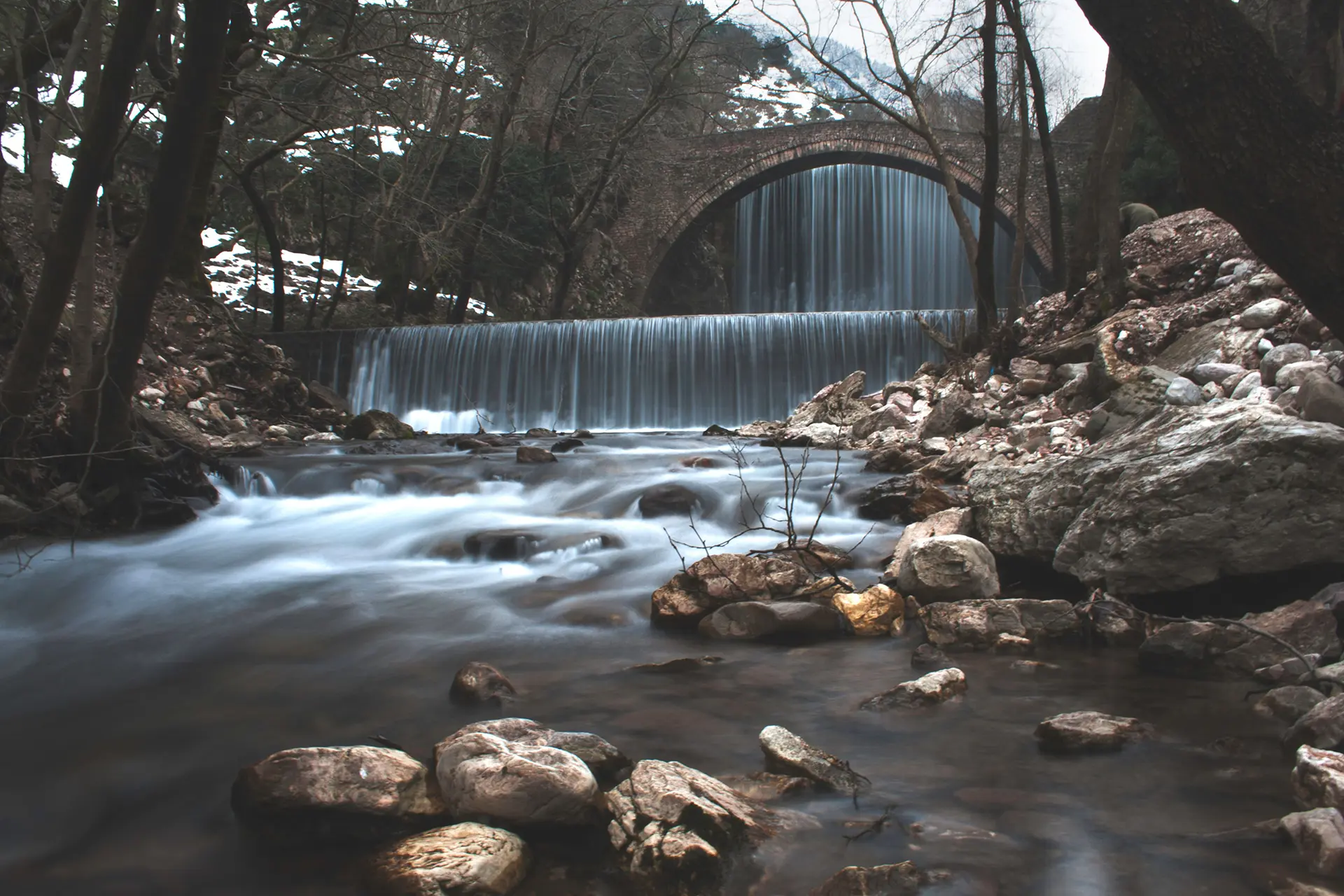
But not every journey needs an itinerary. Drive towards a village you have never visited. Stop beside a stone bridge. Follow a forest road until the landscape changes. Sit beside the river and listen for a while.
The distances are greater here, mobile reception can become less reliable and weather can transform mountain roads quickly. That is part of the region’s character — and a reason to travel prepared, particularly when heading towards higher passes or remote trailheads.
Forests, water and high mountains.
A landscape with its own rhythm.
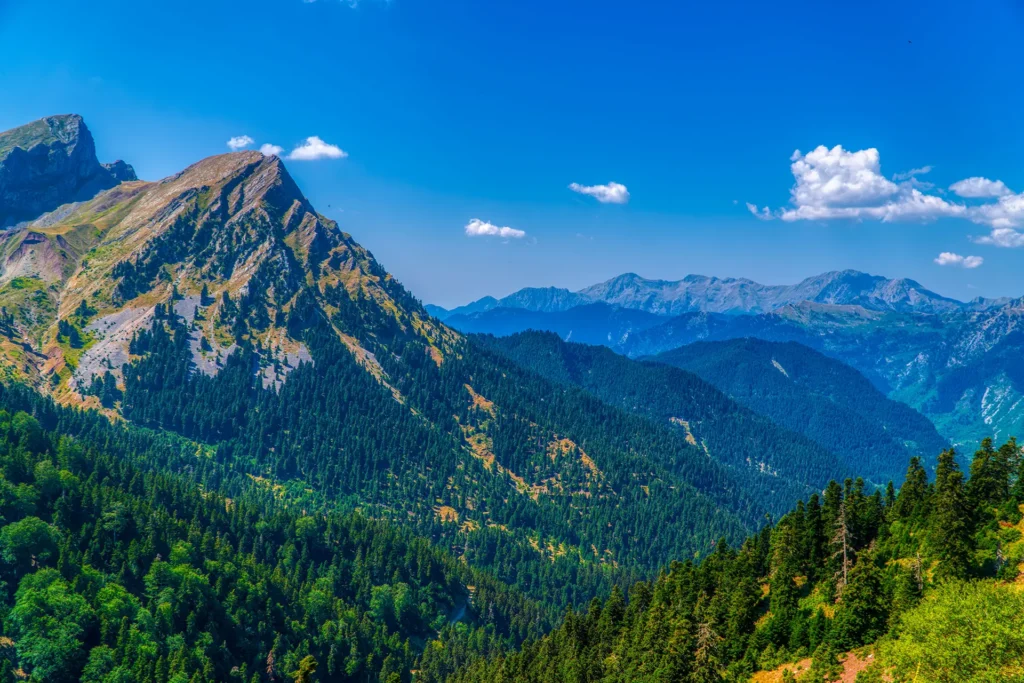
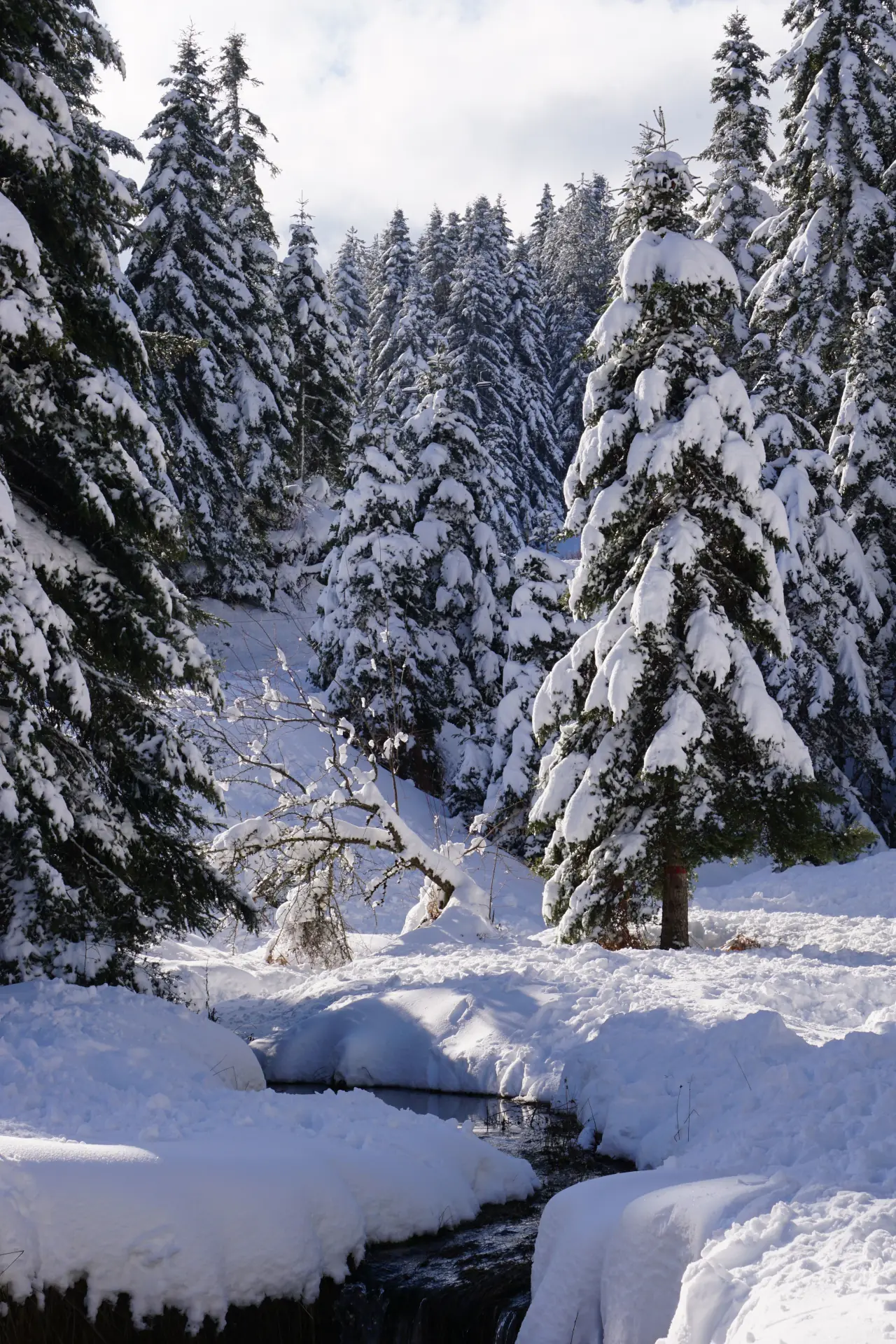
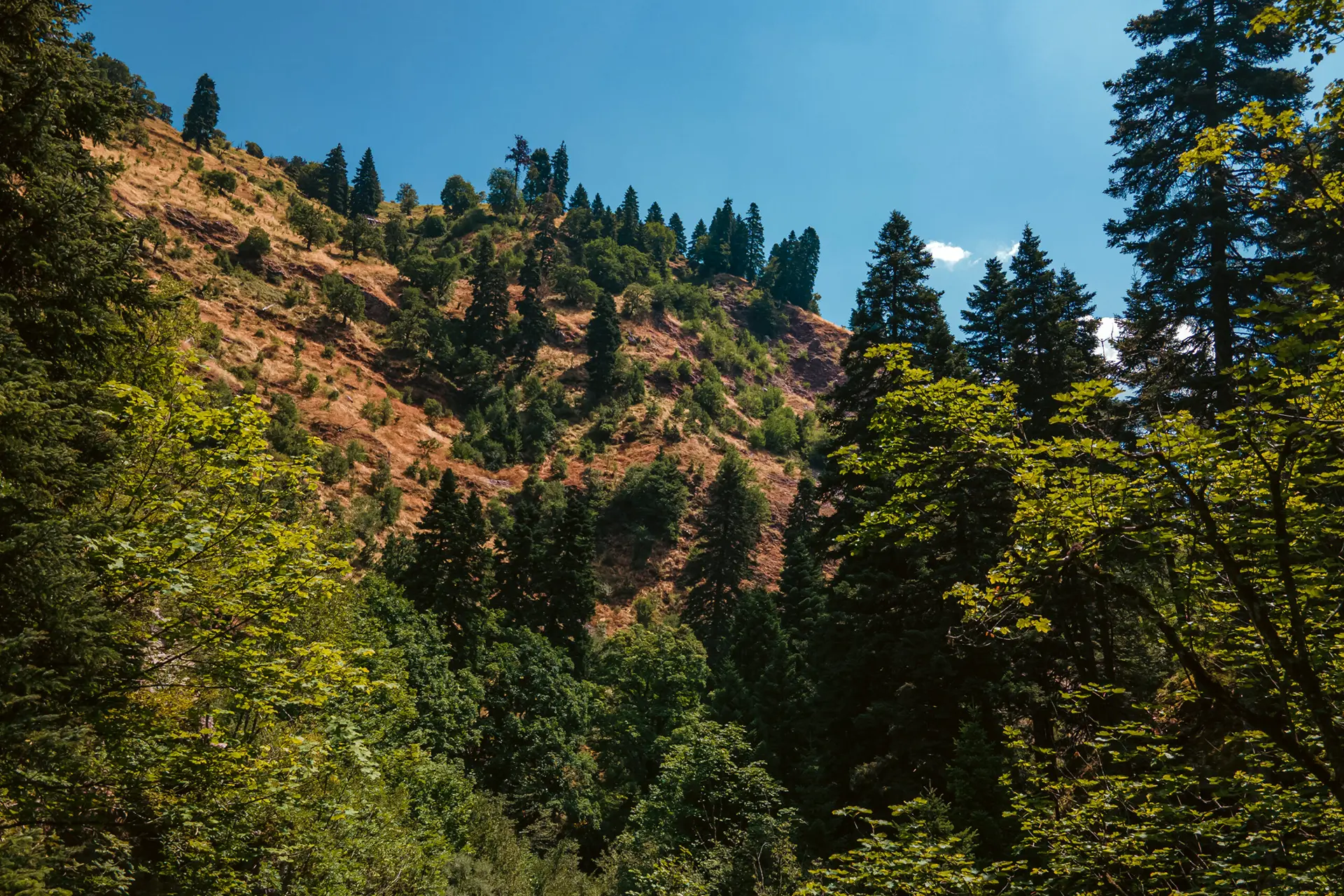
Aspropotamos is one of the wildest natural areas of the southern Pindus. An extensive network of streams descends from the surrounding mountains and eventually feeds the upper Acheloos, while fir, beech, pine and oak forests cover much of the terrain. Large parts of the region belong to the Natura 2000 network because of their ecological importance.
The river has always been central to life here. Villages developed along its tributaries and mountain routes, while bridges connected settlements that could otherwise be separated by steep valleys and winter weather. Livestock farming and forestry shaped local economies, and seasonal movement between the mountains and the plains became part of everyday life.
That movement is closely associated with the region’s Vlach heritage. For generations, families travelled along the old Vlachostrates between their summer settlements in Pindus and winter pastures at lower elevations. Even today, many Aspropotamos villages remain dramatically seasonal — quiet through much of winter before filling again during summer festivals and family gatherings.
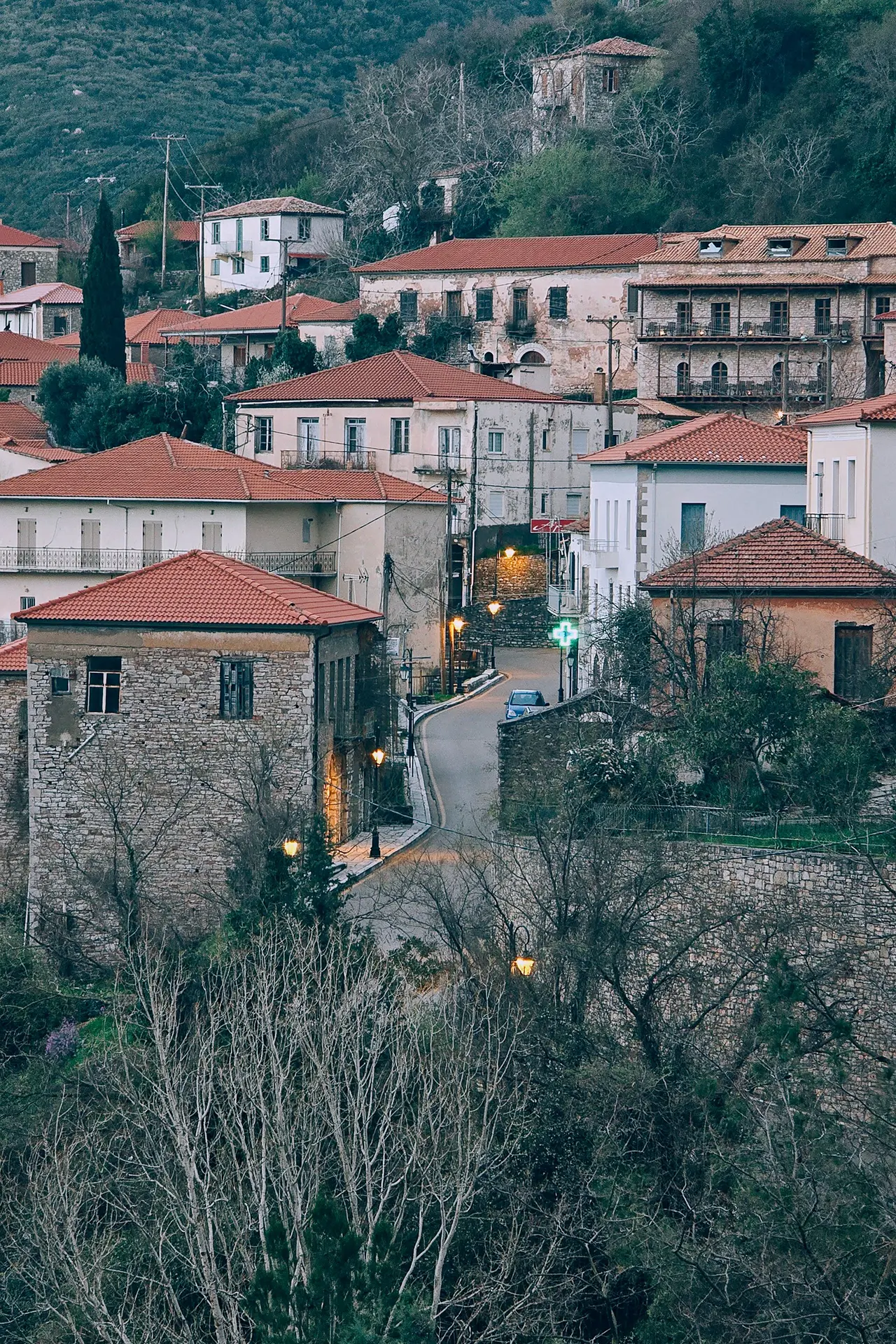
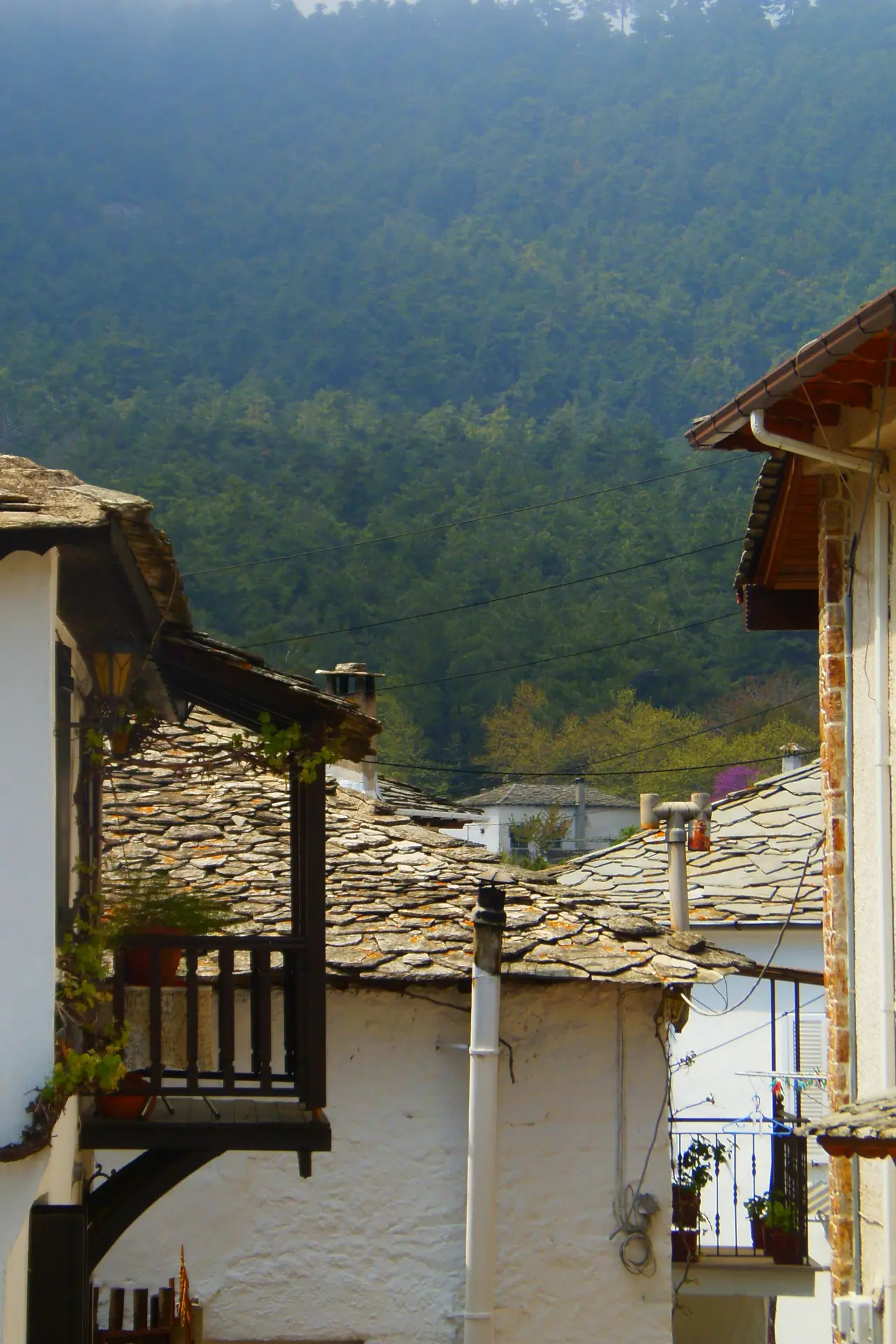
Come in summer and the villages feel alive with conversation, food and music. Visit outside the busiest weeks and the experience changes completely: long mountain roads, running water and settlements surrounded by almost uninterrupted forest.
The exact boundaries of “Aspropotamos” have changed over time. In its broadest sense, the name is used for communities spread throughout the upper Acheloos basin. Today, a core group of villages is commonly associated most closely with the region.
One of the largest and best-known villages of Aspropotamos, Krania sits among dense forest and acts as a natural crossroads for exploring the wider region. Its size, summer activity and location make it one of the main reference points when travelling through these mountains.
Known locally by its older Vlach name, Tzourtzia, Agia Paraskevi occupies a dramatic mountain setting surrounded by forest and running water. The nearby waterfall known as Demon’s Mandani is one of the walking destinations in the area.
Traditionally known as Velitsiani, Kallirroi is one of the larger seasonal communities of Aspropotamos. Like many villages here, its identity is strongest during the warmer months, when families return and village life moves back into the squares and streets.
Polythea — traditionally Dragovisti — lies along one of the main routes through the region. Its name translates fittingly as “many views”, reflecting the expansive mountain landscape that surrounds it.
These neighbouring settlements offer a quieter side of Aspropotamos, surrounded by forests and mountain slopes away from the main visitor routes. They make good stops for travellers interested less in landmarks and more in the character of the region itself.
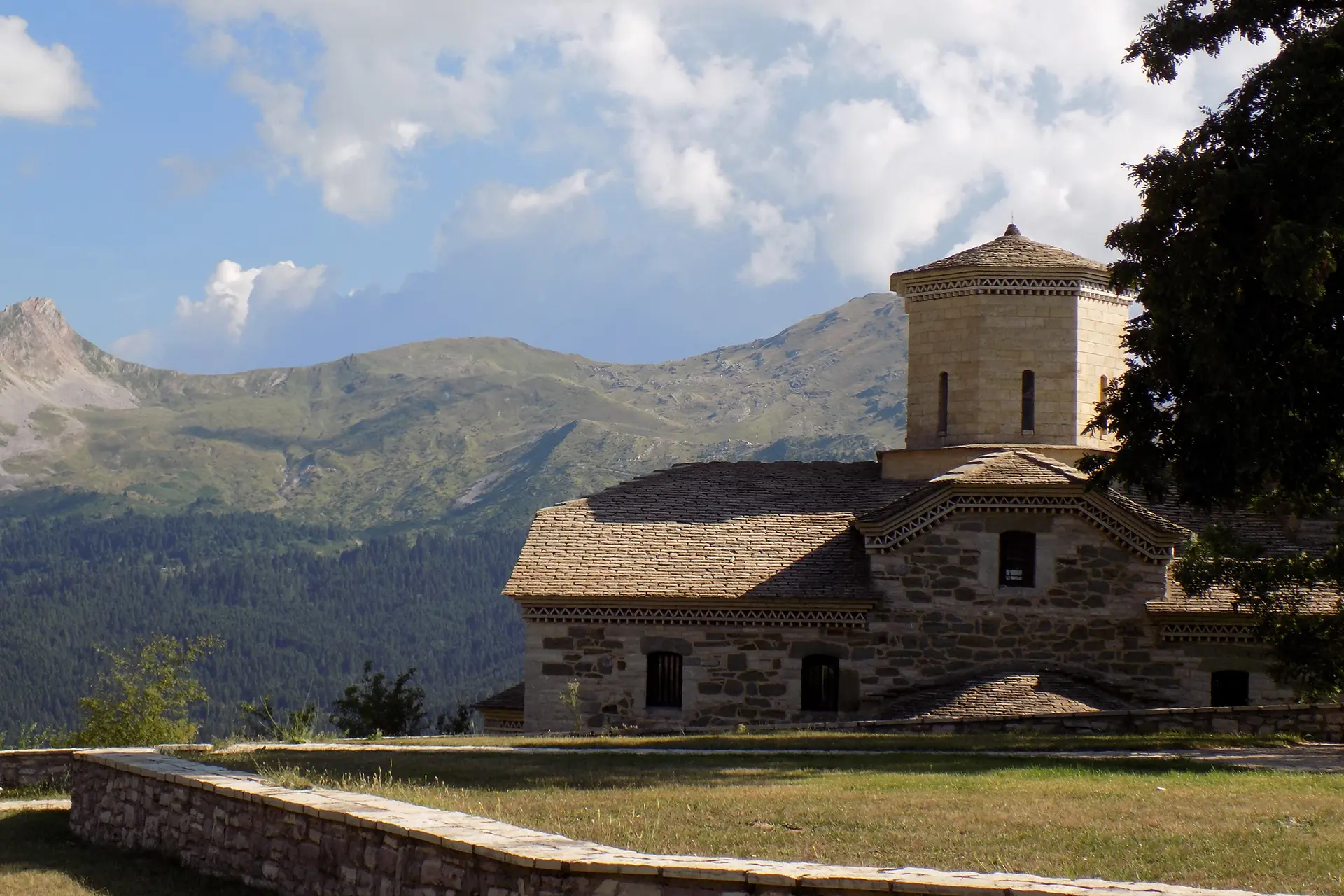
Known historically as Lipinitsa, Anthousa lies deeper towards the western edge of Thessaly. Nearby stands the historic Michos stone bridge, once part of the local route towards the Monastery of Panagia Galaktotrophousa.
Chaliki is one of the highest and most remote villages of Aspropotamos and a gateway towards some of the most dramatic terrain in the Pindus.
Above the village lies Verliga, an alpine plateau at around 2,050 metres where meandering streams form the headwaters of the Aspropotamos–Acheloos river system.
At the northern edge of the traditional Aspropotamos region, Stefani occupies another deeply forested corner of the mountain landscape.
Though administratively separate from several of the villages above, Gardiki and Athamania share strong cultural and geographic ties with Aspropotamos and are often considered part of its broader mountain world.
Different villages.
One shared mountain identity.
Questions before you go.
Answers for the road ahead.
Aspropotamos is both the local name for the upper reaches of the Acheloos River and the name used for the mountainous region surrounding it in the southern Pindus. The area includes numerous villages, extensive forests, rivers and high mountain landscapes.
Definitions vary historically and geographically. The core group commonly includes Krania, Agia Paraskevi, Kallirroi, Polythea, Katafyto, Milia, Anthousa, Chaliki and Stefani, while Gardiki and Athamania are also closely connected culturally and geographically to the region.
The most direct route heads west from Pertouli through Neraidochori, Pyrrha, Desi and Agios Nikolaos towards Aleksiou Bridge. From there, roads branch towards the main Aspropotamos villages.
Late spring through autumn is generally the easiest period for exploring the wider region. Many villages become particularly lively during summer, while high routes such as Baros Pass can be inaccessible during winter because of snow.
The region combines extensive fir and mixed forests, alpine meadows, mountain rivers, waterfalls and peaks exceeding 2,000 metres. Much of it is protected within the Natura 2000 network because of its biodiversity and ecological importance.
Its upper waters rise in the Lakmos mountain range near Chaliki. At the Verliga alpine plateau, streams form characteristic meanders before descending to create the upper course known locally as Aspropotamos.
Yes, particularly the eastern villages, but the region rewards more time. Distances increase quickly once you enter the deeper Pindus, and combining villages, landmarks and mountain roads into a relaxed journey is better suited to a full day or an overnight trip.
The road ends eventually.
The landscape keeps going.
From Pertouli, Aspropotamos feels like the natural next step into the mountains. Each kilometre west leaves something behind: busier villages, wider roads, familiar landscapes.
Ahead are forests, rivers and communities whose identity has been shaped by movement through the Pindus for centuries.
Take the longer road.
This is where it leads.
Go beyond the guidebook and
discover Pertouli.
Explore carefully written travel guides, local stories, hidden routes and expert recommendations. Find inspiration for your next journey and discover more of the landscape before you arrive.